

Pro Tips & Projects
Smart fixes. Real projects. Straight talk from your local pros.
Keeping a home running smoothly is a full-time job — and most people don’t have the time, the tools, or the patience to figure it all out. That’s where we come in.
Welcome to your go-to hub for expert tips, real project breakdowns, money-saving strategies, and homeowner how-tos — all written in clear, real-world language, never contractor-speak.
Whether you’re trying to stay ahead of problems, plan a remodel, or avoid getting ripped off, you’ll find exactly what you need right here… from pros who do this every day.
No fluff. No guesswork. Just straight-up help you can use.
What You’ll Find Here:
Pro Tips to extend the life of your home
DIY-Friendly Fixes anyone can handle safely
Project Breakdowns from real jobs we've completed
Money-Saving Advice to avoid costly mistakes
Before & After Transformations to spark ideas
Seasonal Checklists to keep your home in top shape
Need Personalized Advice?
If you ever want help with a repair, a renovation idea, or just a second opinion, we’re only a message away.

The Stuff Homeowners Ignore Until It’s Embarrassing: 3 Small Flaws That Send the Wrong Message
The Stuff Homeowners Ignore Until It’s Embarrassing: 3 Small Flaws That Send the Wrong Message
Ever heard of “house-blindness”? It’s a real thing. It’s that phenomenon where you walk past a cracked light switch or a scuffed baseboard every day for six months until, eventually, your brain just deletes it from your field of vision. You don’t see it anymore.
But here’s the problem: it doesn’t stay invisible forever. One day you’ve got company coming over, and suddenly you notice the same little issues you’ve been ignoring… because now they’re embarrassing.
Whether you’re hosting a dinner party in Sandy or having the neighbors over in Riverton, first impressions happen in the details. You might have the best charcuterie board in the Salt Lake Valley, but if your guest experiences a “jump scare” in the powder room, that’s what they’re going to remember.
Welcome to Part 1 of our series, The Stuff Homeowners Ignore Until It’s Embarrassing. Today we’re talking about the three things guests notice immediately, even if they’re too polite to say a word.
1. Wobbly Toilets & Loose Fixtures
There is no feeling quite as unsettling as sitting down on a toilet and feeling it shift. It’s a literal “throne of lies.”
Everyone notices a wobbly toilet. It’s a small mechanical failure that creates a huge psychological impact. It makes people wonder, “If the toilet isn’t bolted down, what else is loose in here?” The same goes for towel bars that rattle when you touch them or kitchen faucets that have developed a strange wiggle at the base.
Loose fixtures scream that the home is aging faster than it should. Usually, a wobbly toilet is just a matter of tightening the closet bolts or replacing a wax ring, but if left alone, it can lead to leaks that damage your subfloor over time.
2. Doors That Don’t Close Right
We’ve all been there: you go to close the bathroom door at a friend’s house, and it doesn’t “click.” You have to pull it upward, hip-check it, or, heaven forbid, just sit there holding the handle so it doesn’t drift open.
In the world of home repair in Salt Lake, sticky or misaligned doors are one of the most common complaints we hear. When a door doesn’t latch easily, it’s an immediate signal that the house isn’t being maintained. It suggests normal settling, which is common in the Salt Lake Valley, or just neglected hinges.
If your guests have to exert physical effort just to get some privacy, it’s time to call a handyman in Sandy or West Valley City to get those strike plates realigned. A door should close with a satisfying, effortless click.
3. Stained or Warped Baseboards
When guests are hanging out in your living room, they spend a lot of time sitting down. And when you’re sitting on a sofa, your eyes naturally land right at floor level.
This is where the baseboards live.
If your baseboards are scuffed, peeling, or, worst of all, warped and stained, it stands out like a sore thumb. Warped baseboards can be a red flag for past water exposure. If you see bubbling paint or wood that looks swollen, it’s worth taking a closer look.
Fresh, crisp baseboards act like a frame for your room. When they’re clean and tight against the wall, the whole house feels solid. When they’re messy, the whole house feels a little tired.
Let’s Tighten Things Up
You don’t need a full kitchen remodel to make your home feel high-end. Sometimes, it’s just about fixing the stuff that wiggles, sticks, or warps.
If you’re ready to cure your “house-blindness” and get your home ready for company, give us a shout. Whether you need a Salt Lake handyman for a quick afternoon of repairs or a handyman in Sandy, Utah to handle those “it’s fine” problems that really aren’t fine, we’ve got your back.
Stay tuned for Part 2, where we’ll talk about the daily annoyances you’ve learned to live with, but shouldn’t have to.

Get Your Home Summer-Ready (Part 4: Safety in the Heat)
Get Your Home Summer-Ready (Part 4: Safety in the Heat)
When that Utah sun starts beating down on the Salt Lake Valley, our first instinct is to crank the AC and stay inside. But while we’re staying cool, our homes are under a massive amount of stress. Summer heat doesn't just make things uncomfortable; it exposes hidden risks that can lead to expensive repairs or even dangerous situations if ignored.
At Your Handyman Pros, we’ve seen how quickly a small oversight can turn into an emergency when the temperature hits triple digits in places like Herriman, Riverton, and Sandy. In the final part of our "Summer-Ready" series, we’re looking at the safety risks you need to address before the next heatwave.
10. Overloaded Circuits (AC + Appliances)
As the heat climbs, so does our power consumption. Between the central air running non-stop, kids home for the summer with their gadgets, and the extra fridge in the garage working overtime, your electrical system is pushed to its limit.
In older homes across West Valley City and Magna, the original wiring might not have been designed for modern electrical loads. If you notice flickering lights when the AC kicks on or outlets that feel warm or hot to the touch, your circuits might be overloaded. This is a major fire hazard.
Before the peak of summer, it’s worth having a professional look at your panel. We often recommend dedicated circuits for high-draw appliances to keep your home safe and prevent those annoying tripped breakers. If you're noticing strange occurrences, check out our guide on 3 weird house noises explained. Sometimes that ‘humming’ can be electrical, not mechanical.
11. Dryer Vents: The Silent Fire Risk
Most homeowners don't associate their dryer vent with summer safety, but they should. Your dryer already generates a ton of heat. If the vent is clogged with lint, heat builds up quickly and creates a serious fire risk.
A clean vent also means your dryer doesn’t have to work as hard, which saves you money on your energy bill. If it's been more than a year since your last cleaning, or if your clothes are taking two cycles to dry, it’s time to clear it out.
12. Aging HVAC Systems Under Strain
Your HVAC system is the heart of your home during a Utah summer. An aging system that hasn't been maintained is at higher risk of failure. When the outdoor temperature is 95°F, your attic can easily reach 140°F. That extreme heat causes components to run hotter and wear out faster.
We frequently see systems fail on the hottest day of the year because of a simple part that wore out under the strain. Don’t wait for the breakdown to happen. A quick inspection can identify home maintenance inspection red flags before they leave you sweating in your living room.
Let’s Keep Your Home Safe
Summer should be about backyard BBQs and trips to the canyon, not worrying about electrical fires or broken AC units. Whether you’re in Sandy, Riverton, or anywhere in the Salt Lake Valley, Your Handyman Pros is here to help.
As a licensed B100 General Contractor , we handle everything from safety inspections to major repairs. We are fully licensed and insured to give you peace of mind that the job is done right the first time.
Don't let the heat get the best of your home. Reach out today for a safety check-up!

Get Your Home Summer-Ready (Part 3: Comfort & Airflow Fixes)
Get Your Home Summer-Ready (Part 3: Comfort & Airflow Fixes)
Ever walked from your nice, cool living room into a guest bedroom or office that feels like an oven? It’s a common frustration for many homeowners across the Salt Lake Valley. As the Utah sun starts to beat down on places like Herriman and Riverton, those "hot spots" in your house become impossible to ignore.
In Part 1 and Part 2 of this series, we talked about efficiency and exterior prep. Today, we’re diving into the "Comfort & Airflow" fixes that make the difference between a house you tolerate and a home you actually enjoy living in during July.
7. The Airflow Audit: Don't Suffocate Your AC
It sounds simple, but you’d be surprised how many "broken" AC systems are actually just suffering from poor airflow. If a room feels stuffy, start by looking at your floor and wall registers.
Often, during winter furniture rearranging, a heavy recliner or a thick rug ends up covering a vent. This doesn’t just heat up that room. It can throw off your system’s airflow balance, making your AC work harder and less efficiently. While you're at it, check the registers for dust buildup. A quick vacuuming of the grates can help improve airflow and reduce dust buildup. If you notice your home has weird temperature swings, it might be time for a professional to look for issues like duct leaks, blocked returns, or poor airflow balance.
8. Battling Window Heat Gain
In Sandy and West Valley City, our homes often have large, beautiful windows that let in that gorgeous Utah scenery. Unfortunately, they also let in a massive amount of "solar heat gain." On a 95-degree day, your sun-facing windows act like heat collectors, letting in and trapping solar energy.
If you have a room that stays ten degrees warmer than the rest of the house, it’s likely a window issue. Here are a few fixes:
Blackout Curtains: Keeping them closed during the peak sun hours (usually 10 AM to 4 PM) can noticeably reduce room temperatures, especially in direct sun.
Reflective Film: Applying a UV-blocking film to the glass helps bounce heat away before it ever enters the room.
Weatherstripping: If you can feel heat "bleeding" in around the edges, your seals are shot. Sealing these gaps now can noticeably reduce cooling costs over time.
9. The "Switch of Seasons" (Ceiling Fan Direction)
This is the easiest win in the book, and yet almost everyone forgets it. Look up at your ceiling fan. There is a small toggle switch on the motor housing.
For Summer: Your fan blades should be rotating counter-clockwise. This creates a "wind chill" effect by pushing a breeze directly downward. It won't actually lower the room's temperature, but it makes the skin feel 6 to 8 degrees cooler, allowing you to turn the thermostat up and save money. If your fans are old, wobbly, or just plain loud, replacing them is a small upgrade that makes a big impact.
Get Professional Help for a Cooler Summer
If you’ve tried the DIY fixes and your Magna or Herriman home is still feeling the heat, it might be time for a professional eye. Whether it’s installing more efficient fixtures, repairing damaged drywall around leaky vents, or handling larger comfort upgrades, Your Handyman Pros is here to help.
We are a licensed and insured B100 General Contractor and can handle everything from small repairs to full-scale home improvements. Don't spend another summer hiding in the basement!
Ready to beat the heat? Give us a shout and let’s get your home summer-ready!
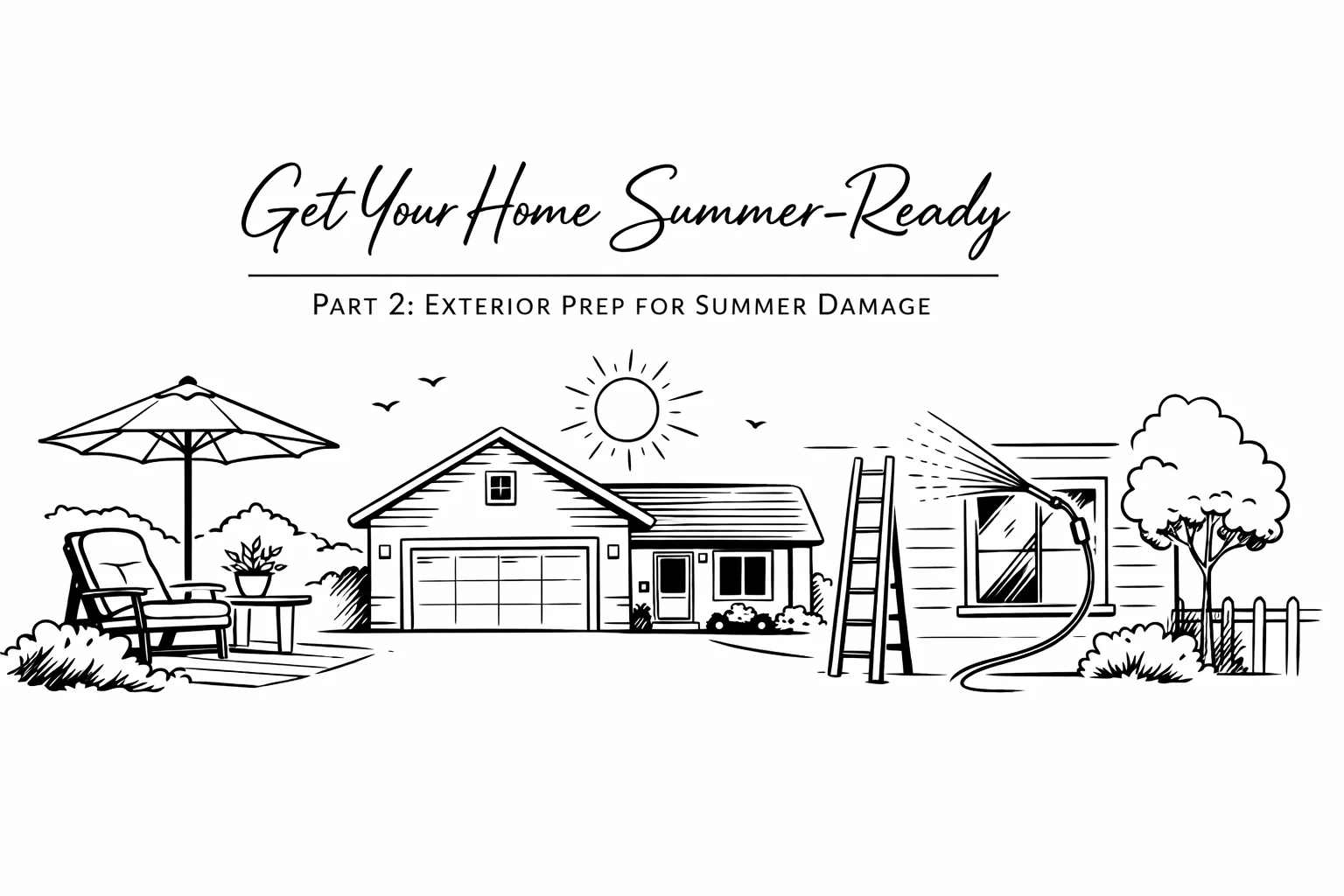
Get Your Home Summer-Ready (Part 2: Exterior Prep for Summer Damage)
Get Your Home Summer-Ready (Part 2: Exterior Prep for Summer Damage)
Hey there, Salt Lake Valley neighbors!
Welcome back to Part 2 of our summer-ready series. Last time, we talked about keeping your cool inside with HVAC tips and efficiency hacks. Today, we’re stepping outside.
In Utah, we love our summers. The hikes, the BBQs, and those late sunsets over the Oquirrh Mountains. But the transition from spring to summer can be brutal on your home’s exterior. Between the intense high-altitude UV rays and those sudden "Microburst" summer storms that roll through places like Herriman and Magna, your home takes a beating.
If you ignore the exterior now, you aren't just losing curb appeal; you're inviting structural damage that gets very expensive, very fast. Here is what you need to look for before the heat really kicks in.
4. The Utah Special: Sprinklers Hitting the Siding
We see this all the time from Riverton to West Valley City. You set your sprinklers in the spring, but as the wind picks up or heads get knocked out of alignment, that water starts hitting your house instead of the lawn.
In our climate, constant moisture on siding leads to hard water staining, but more importantly, it causes wood rot and attracts pests. If you have wood or composite siding, that daily soaking can work its way behind siding and into underlying materials over time. Check your zones now. If you see dark spots or beards of moss on your foundation or siding, you’ve got a problem.
For more on what to look for, check out our guide on hidden moisture problems homeowners miss.
5. Cracked Paint and Exposed Wood
The Salt Lake sun is no joke. UV rays break down the chemical bonds in paint, causing it to flake and peel. Once the paint goes, your wood trim, fascia boards, and window sills are much more vulnerable to moisture damage.
Once moisture from a summer storm hits exposed wood, it starts to swell and decay. By the time you notice a "soft spot" on your window trim in Sandy, you may be looking at a full replacement rather than a simple touch-up. Walk around your home and look for hairline cracks in the caulk or any areas where the paint looks "chalky" or thin. These are the exterior red flags you can’t afford to ignore.
6. Decks and Fences: The Great Summer Dry-Out
Your deck is the heart of your summer hosting, but if the wood is grey, splintering, or warping, it’s screaming for help. Wood is like a sponge; it expands when wet and contracts when dry. In the Salt Lake Valley, that cycle happens fast.
If your deck or fence hasn't been sealed in the last couple of years, the summer heat will dry out the wood and break down protective finishes, leading to weakening and potential structural issues over time. We specialize in making sure your outdoor living spaces are safe and beautiful. Whether it’s reinforcing a wobbly railing or repairing boards that have seen better days, getting it handled now means you won't be dealing with a collapsed stair during your July 4th party.
Why Choose a Professional?
At Your Handyman Pros, we are a licensed and insured B100 General Contractor. That means we have the expertise to handle everything from small exterior repairs to full-scale exterior renovations.
Don't let a $200 maintenance task turn into a $5,000 structural repair. If you’re seeing signs of wear on your home’s exterior, give us a shout. We take pride in keeping homes across the Salt Lake Valley in tip-top shape.
Stay tuned for Part 3, where we’ll dive into comfort and airflow fixes to keep your home feeling like an oasis!
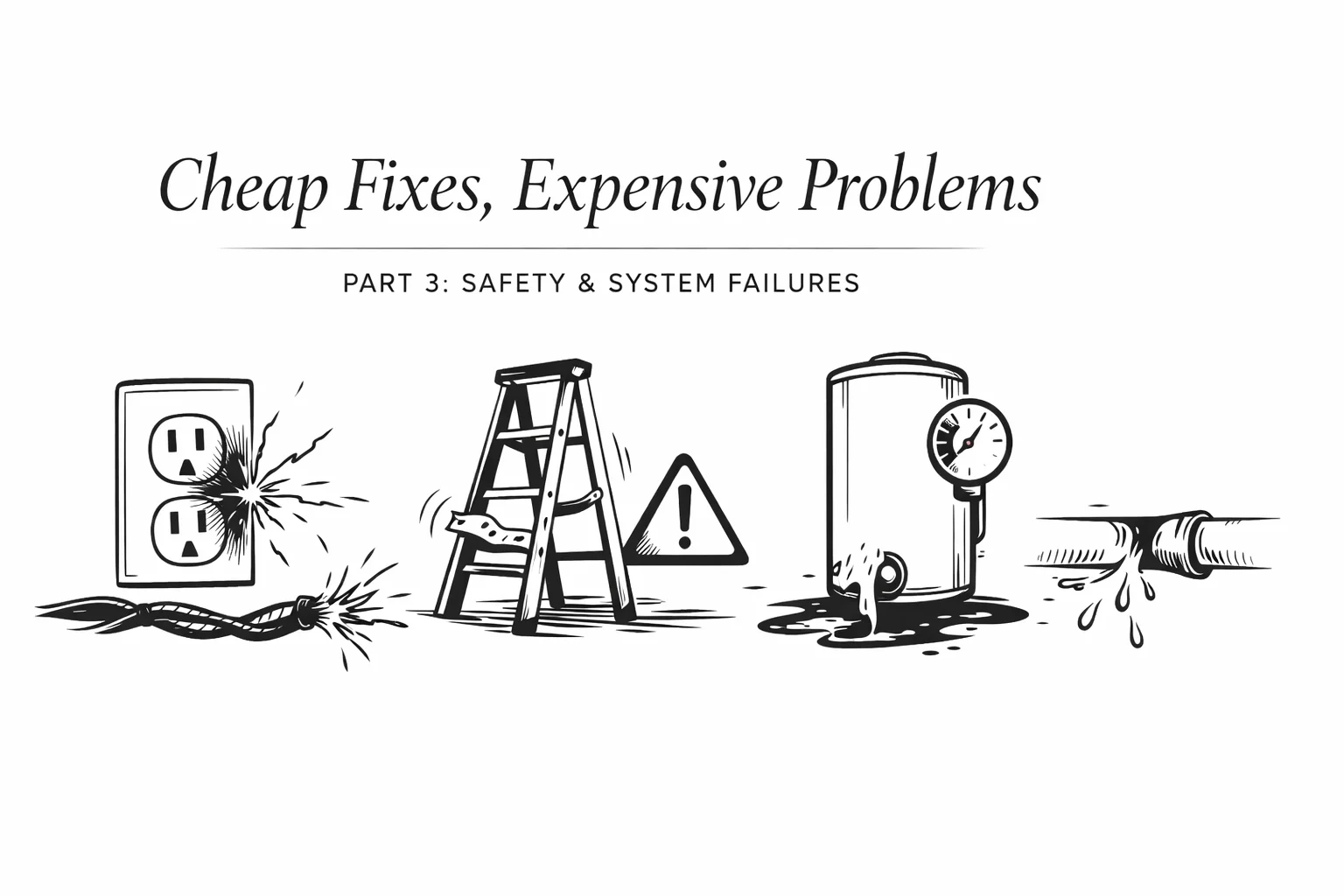
Get Your Home Summer-Ready (Part 1: Cooling Efficiency & Energy Bills)
Get Your Home Summer-Ready (Part 1: Cooling Efficiency & Energy Bills)
If you live in the Salt Lake Valley, you know the drill. One day we’re pulling out the snow shovels, and the next, we’re cranky because the thermometer hit 90 degrees and the living room feels like a sauna. But the real "heat" doesn't usually come from the sun. It comes from that utility bill landing in your inbox in July.
Why does your energy bill explode every summer? It’s usually not just because you’re running the AC; it’s because your home is working way harder than it needs to. Whether you’re in Herriman, Riverton, or West Valley City, getting your home’s efficiency dialed in right now is the best way to keep your wallet happy when the triple digits arrive.
Here is Part 1 of our summer-ready series: focusing on the big-ticket items that drive up your costs.
1. The HVAC Filter: The $15 Fix for a $500 Bill
We’ve mentioned filters before, but from an energy perspective, a dirty filter is an absolute disaster. Think of it like trying to breathe through a thick wool sweater while running a marathon. Your AC unit has to work harder to pull air through a clogged, dusty filter.
In Utah, where we deal with seasonal pollen and dust, those filters fill up fast. When airflow is restricted, your system runs longer cycles, consumes more electricity, and stays under constant strain. Replacing your filter every 30–60 days is the easiest way to immediately drop your cooling costs. If you aren't sure which filter size you need or how to access a tricky ceiling vent, Your Handyman Pros can help get your maintenance schedule on track.
2. The Outdoor Unit: Clear the Clutter
Your outdoor condenser unit is responsible for releasing the heat from inside your home. If it’s buried under last year’s dried leaves, overgrown weeds, or "stuff" stored against it, that heat has nowhere to go.
Some homeowners plant beautiful shrubs to hide the "ugly" AC unit, but those plants end up choking the system. You need at least two feet of clear space around the unit for proper airflow. Check for "cottonwood snow" stuck in the fins, too. That stuff acts like a blanket and traps heat. A quick cleaning of the exterior unit can significantly boost efficiency. For more on keeping your exterior in shape, check out our tips on exterior home inspection red flags.
3. Attic Insulation and Heat Gain
If your upstairs bedrooms feel like an oven while your basement is a walk-in freezer, you probably have an insulation problem. In many older homes across the Salt Lake Valley, attic insulation has settled or was never sufficient to begin with.
In the summer, radiant heat from your roof transfers into your living space. If your insulation is thin, your AC is fighting a losing battle against the sun. Adding or replacing insulation acts as a barrier, keeping the cool air where it belongs. This is one of the most effective upgrades for comfort and energy savings.
Save Money Immediately
Don't wait until you're sweating through your shirt to think about efficiency. Taking these steps now ensures your home stays comfortable and your budget stays intact.
At Your Handyman Pros, we’re more than just a repair service. We are a licensed and insured B100 General Contractor, and we specialize in helping homeowners across the Salt Lake Valley, from Riverton to Salt Lake City, optimize their homes for every season. Whether you need an efficiency audit, insulation upgrades, or help sealing up air leaks, we’ve got you covered.
Stay tuned for Part 2, where we’ll dive into exterior prep and how to prevent summer storm damage!
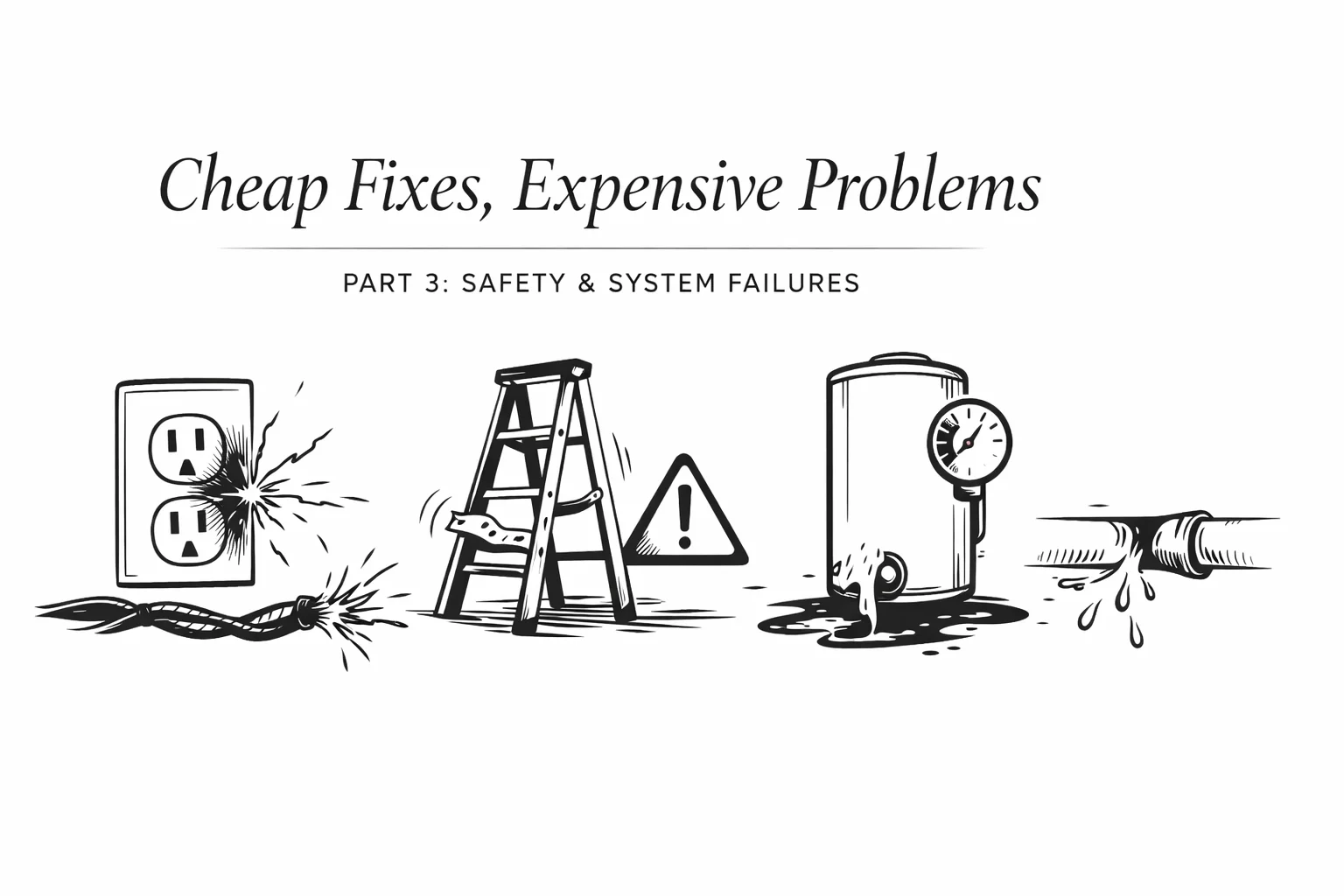
Cheap Fixes, Expensive Problems (Part 3: Safety & System Failures)
Cheap Fixes, Expensive Problems (Part 3: Safety & System Failures)
Welcome back to the final installment of our "Cheap Fixes, Expensive Problems" series! If you missed the first two parts, we’ve been diving into how tiny, affordable maintenance tasks can prevent absolute financial nightmares down the road. We’ve covered interior water damage and exterior structural issues, but today we’re looking at the "invisible" systems in your home.
In the Salt Lake Valley, we put our homes through a lot. From the scorching summers in Riverton to the freezing winters in Magna, our electrical and HVAC systems are the heartbeat of our comfort. Neglecting them doesn’t just lead to high repair bills, it can lead to serious safety risks.
Here are the top three safety and system failures you can avoid for the price of a takeout dinner.
7. Ignored Electrical Warning Signs
We’ve all been there. You plug in the vacuum in your Sandy living room and notice the lights flicker. Or maybe you touch a light switch and it feels oddly warm. It’s easy to think, "Oh, it’s just an old house thing," but those are actually cries for help from your electrical system.
A buzzing outlet or a warm switch can indicate a loose connection or an overloaded circuit. If you catch it early, a professional can usually fix the issue for $100–$300. If you ignore it? You’re looking at the potential for an electrical fire or a mandatory full-home rewiring, which can easily top $15,000+.
When it comes to electricity, don't guess. As a licensed B100 General Contractor, we always tell our neighbors: if it makes a sound or feels hot, call a pro immediately.
8. Dirty or Neglected HVAC Filters
This is arguably the easiest home maintenance task in existence, yet it’s the one most frequently forgotten. Your HVAC filter’s job is to keep dust and debris out of the sensitive internal components of your furnace and AC unit.
When that filter gets clogged, your system has to work twice as hard to pull air through. This causes the motor to overheat and puts extra strain on critical system components.
The Cheap Fix: $10–$30 for a fresh filter every 90 days.
The Expensive Problem: $3,000–$8,000 for a full system replacement when the unit finally gives up the ghost.
In West Valley City and Herriman, where dust and pollen can kick up frequently, checking these filters is non-negotiable for a long-lasting system. You can learn more about keeping your systems ready in our post on signs your home isn't ready for summer.
9. Unsealed Air Gaps Around Doors and Windows
Utah’s freeze-thaw cycles are brutal on sealants. Over time, the weatherstripping around your front door or the caulking around your windows in Herriman will shrink and crack.
At first, this just feels like a tiny draft. You might turn up the heat to compensate. But those gaps are doing more than wasting energy; they are letting moisture into your wall cavities. Once moisture gets behind the drywall, it it can create conditions where mold and rot develop.
The Cheap Fix: $10–$50 in weatherstripping or a tube of high-quality sealant.
The Expensive Problem: Thousands in lost energy costs over time, plus the cost of mold remediation and drywall repair. For more on this, check out our guide on sealing your home for spring and summer.
Let Your Handyman Pros Handle the Small Stuff
At Your Handyman Pros, we take pride in helping Salt Lake Valley homeowners catch these small issues before they become "I need a second mortgage" problems. Whether you’re in Riverton, Sandy, or Magna, we’re here to help keep your home safe, efficient, and valuable.
Don't wait for a flicker to become a fire or a draft to become a rot problem. We are licensed and insured and ready to help you tackle your home’s "to-do" list.
Need a hand with your home maintenance? Contact Your Handyman Pros today!

Cheap Fixes, Expensive Problems (Part 2: Exterior Damage You Can’t Ignore)
Cheap Fixes, Expensive Problems (Part 2: Exterior Damage You Can’t Ignore)
Hey there, Salt Lake Valley homeowners! If you caught Part 1, you already know the deal: small fixes now or massive bills later.. Last time we talked about interior water damage, but today we’re stepping outside.
Living in places like Herriman, Sandy, and Riverton means our homes take a beating from the Utah elements. Between the heavy snow, the spring runoff, and those summer windstorms, your home’s exterior is your first line of defense. But when that defense has a tiny chink in the armor, the costs can skyrocket faster than you can say "basement flood."
Here are three exterior "cheap fixes" that prevent "expensive nightmares."
4. Clogged Gutters: The Foundation Killer
It seems so simple, right? A few leaves and some pine needles in the tray. But when your gutters are clogged, water has nowhere to go but over the side. Instead of being channeled away from your home, that water pools right at your foundation.
In the Salt Lake Valley, our soil can shift. When you dump hundreds of gallons of water next to your footer every time it rains, you’re practically inviting foundation cracks and basement moisture.
The Cheap Fix: $0 (if you’re brave on a ladder) to $150 for a professional cleaning.
The Expensive Problem: $5,000–$15,000+ for foundation stabilization or mold remediation in a flooded basement.
Pro Tip: Check out our guide on exterior home inspection red flags to see what else might be lurking.
5. Missing or Damaged Roof Shingles
We’ve all seen it after a big windstorm, that one lonely shingle sitting on the lawn. It’s easy to look up at the roof and think, “There are thousands of them. One missing won’t matter.”
That’s how roof leaks start.
The problem is that shingles work like a suit of armor. Once one piece is missing, the underlayment and roof decking are exposed. In Utah’s freeze-thaw cycle, water gets under the surrounding shingles, freezes, expands, and rips them up even further. Give it one season, and now you’ve got a ceiling stain and hidden rot.
The Cheap Fix: $10–$50 for a quick shingle replacement and some roofing cement.
The Expensive Problem: $10,000–$20,000 for a full roof replacement because the plywood decking rotted out.
6. Cracked Exterior Caulking (Windows & Siding)
This is probably the most overlooked maintenance item in the valley. Caulking around your windows, doors, and siding transitions isn't just for looks; it’s a water-tight seal.
Over time, the Utah sun bakes that caulk until it cracks. Once those gaps open up, water slips behind your siding where you can’t see it. You won't see the damage until the structural wall studs start to rot or you notice a draft that’s spiking your energy bills. Seal it now, save yourself all spring and summer.
The Cheap Fix: $20–$100 for high-quality outdoor sealant and a little elbow grease.
The Expensive Problem: Thousands in structural wood rot repair and siding replacement.
We’re Here to Help
At Your Handyman Pros, we see these "expensive problems" every day, and most of them could have been avoided in a single Saturday afternoon. Whether you’re in Riverton, Herriman, or anywhere else in the Salt Lake Valley, don’t let a $20 problem turn into a $2,000 headache.
We are a licensed and insured B100 General Contractor. If you aren't comfortable on a ladder or just want a pro to give your exterior a once-over, give us a call and we’ll take care of it. We’d love to help you keep your home in tip-top shape!
Stay tuned for Part 3, where we’ll talk about the safety and system failures that could literally save your life (and your wallet).

Cheap Fixes, Expensive Problems (Part 1: Water Damage Nightmares)
Cheap Fixes, Expensive Problems (Part 1: Water Damage Nightmares)
Hey there, Salt Lake Valley homeowners! We’ve all been there: you notice a tiny crack in the caulk around the tub or a slight wiggle when you sit on the toilet, and you think, "I’ll get to that next weekend." But in the world of home maintenance, those tiny "next weekend" projects have a nasty habit of turning into "call the bank for a loan" nightmares.
Water is the ultimate slow-motion wrecking ball. Here in Utah, freeze-thaw cycles and dry air make materials shift, crack, and fail faster, so keeping an eye on moisture is job number one. Today, we’re kicking off our new series, Cheap Fixes, Expensive Problems, by looking at the three water damage red flags that cost almost nothing to fix now but thousands to fix later.
1. Cracked Caulk Around Tubs and Showers
It looks like a hairline fracture, barely worth a second thought. But that tiny gap is an open door for water to seep behind your tiles every time someone takes a shower. Once water gets back there, it hits the drywall or the wooden framing. Since it’s trapped in a dark, damp space, it creates the perfect breeding ground for mold and rot.
By the time you see the "soft" spots in your wall or notice a musty smell, the damage is done. You aren’t just looking at a new bead of silicone; you’re looking at a full-scale gut job.
The Cheap Fix: $5–$15 for a tube of high-quality kitchen and bath caulk and 30 minutes of work.
The Expensive Problem: $1,000–$10,000+ for mold remediation, structural repair, and a full shower remodel.
2. The Loose or Wobbling Toilet
If your toilet shifts even a fraction of an inch when you sit down, you have a ticking time bomb in your bathroom. That movement puts stress on the wax ring: the seal that prevents sewage and water from leaking onto your floor. Once that seal breaks, water starts soaking into your subfloor every time you flush.
The worst part? You might not see the water on the tile. It stays underneath, rotting the wood and the subfloor can become soft, unstable, and eventually fail. It can happen in older homes in Sandy and West Valley City, where original subfloors finally meet their match with a $20 part.
The Cheap Fix: Tightening the closet bolts or replacing the wax ring ($20–$50).
The Expensive Problem: Replacing the subfloor, joists, and entire bathroom flooring ($2,000+).
3. Dripping Under-Sink Plumbing
It starts with a "drip... drip... drip" under the kitchen or bathroom sink. Many homeowners just put a plastic bowl under it and call it a day. But that moisture creates high humidity inside your cabinetry. Over time, the particle board or plywood in your cabinets will swell, delaminate, and eventually rot. Plus, if you have hidden moisture problems under your sink, you are inviting mold to take up residence in your kitchen.
The Cheap Fix: $10–$30 for a new washer, P-trap, or supply line.
The Expensive Problem: Full cabinet replacement and professional mold remediation ($3,000–$5,000).
Why Professional Help Matters
Water damage often spreads far beyond what you can see, especially inside walls or under flooring. By the time visible signs show up, the problem is usually much bigger than it looks. While a tube of caulk is a great DIY project, if you suspect there’s already moisture behind the wall, it’s time to call in the pros.
At Your Handyman Pros, we are a licensed and insured B100 General Contractor. Whether you are in Herriman, Riverton, or Magna, we can help you catch these interior red flags before they tank your home’s value.
Don't let a $10 problem turn into a $10,000 nightmare. If you’ve been putting off these small repairs, give us a shout. We’re here to keep your Salt Lake Valley home dry, safe, and solid.
Stay tuned for Part 2, where we’ll talk about the exterior issues that can ruin your foundation!

9 Things Home Inspectors Always Notice (Part 3: Maintenance Red Flags)
9 Things Home Inspectors Always Notice (Part 3: Maintenance Red Flags)
Welcome back to the final stretch of our series! If you’ve been following along, we’ve already tackled the interior and exterior "gotchas" that home inspectors love to find. Today, we’re diving into the "Maintenance Red Flags."
These are the items that tell an inspector, and potential buyers, how well you’ve cared for the home over the years. In the Salt Lake Valley, where our seasons swing from scorching summers to freezing winters, keeping up with these small tasks prevents them from turning into massive repair bills.
Here are the final three things home inspectors always notice.
7. Dirty Dryer Vents
You probably clean your lint trap after every load of laundry (at least, we hope so!), but when was the last time you looked at the actual vent ducting? Home inspectors check this because a clogged dryer vent is a major fire hazard.
Over time, lint bypasses the trap and builds up in the hose and the exterior wall vent. This restricts airflow, making your dryer work harder (hello, higher energy bills!) and creating a serious fire hazard inside your walls. If an inspector sees a vent caked with lint or a plastic "accordion" style hose (which is a big no-no for fire safety), it’s going straight onto the report.
Whether you’re in a bungalow in Magna or a newer build in Herriman, a quick professional vent cleaning is one of those home repairs homeowners often put off that can make a huge difference in safety.
8. Water Heater Corrosion
Your water heater is the unsung hero of your home: until it starts leaking all over your basement floor. Inspectors look closely at the "birth date" of the unit and the condition of the pipes.
In the Salt Lake Valley, our water can be a bit hard on plumbing. Inspectors look for "calcification" (that white, crusty buildup) or orange rust around the valves and the top of the tank. Corrosion is a sign that a slow leak is already happening or that the tank is reaching the end of its life. If your water heater looks heavily worn or corroded, it’s a red flag for future water damage.
9. Loose Deck Railings
Safety is the number one priority for any home inspector. If they walk out onto your deck and the railing wiggles even an inch when they lean on it, it’s a major liability.
Utah weather is tough on wood. Between the heavy snow in Sandy and the intense UV rays in Riverton, deck hardware can loosen and wood can rot over time. A loose railing isn't just a "minor fix," it’s a fall hazard that could result in serious injury. Inspectors will check the "pickets" (the vertical slats) and the posts to ensure everything is rock-solid.
If your deck is showing its age, it might be one of those signs your home isn't ready for summer.
Let the Pros Handle the Punch List
Home inspections can be stressful, but they don’t have to be. Most of these "red flags" are simple fixes if caught early.
Whether you need a handyman in West Valley City to secure those deck railings or a licensed contractor in Salt Lake Valley to check your plumbing and vents, Your Handyman Pros has your back. We are a licensed and insured B100 General Contractor, meaning we have the expertise to handle everything from small maintenance tasks to larger renovation projects.
Don't wait for the inspector's report to find out what's wrong. Give us a call, and let’s get your home in tip-top shape!
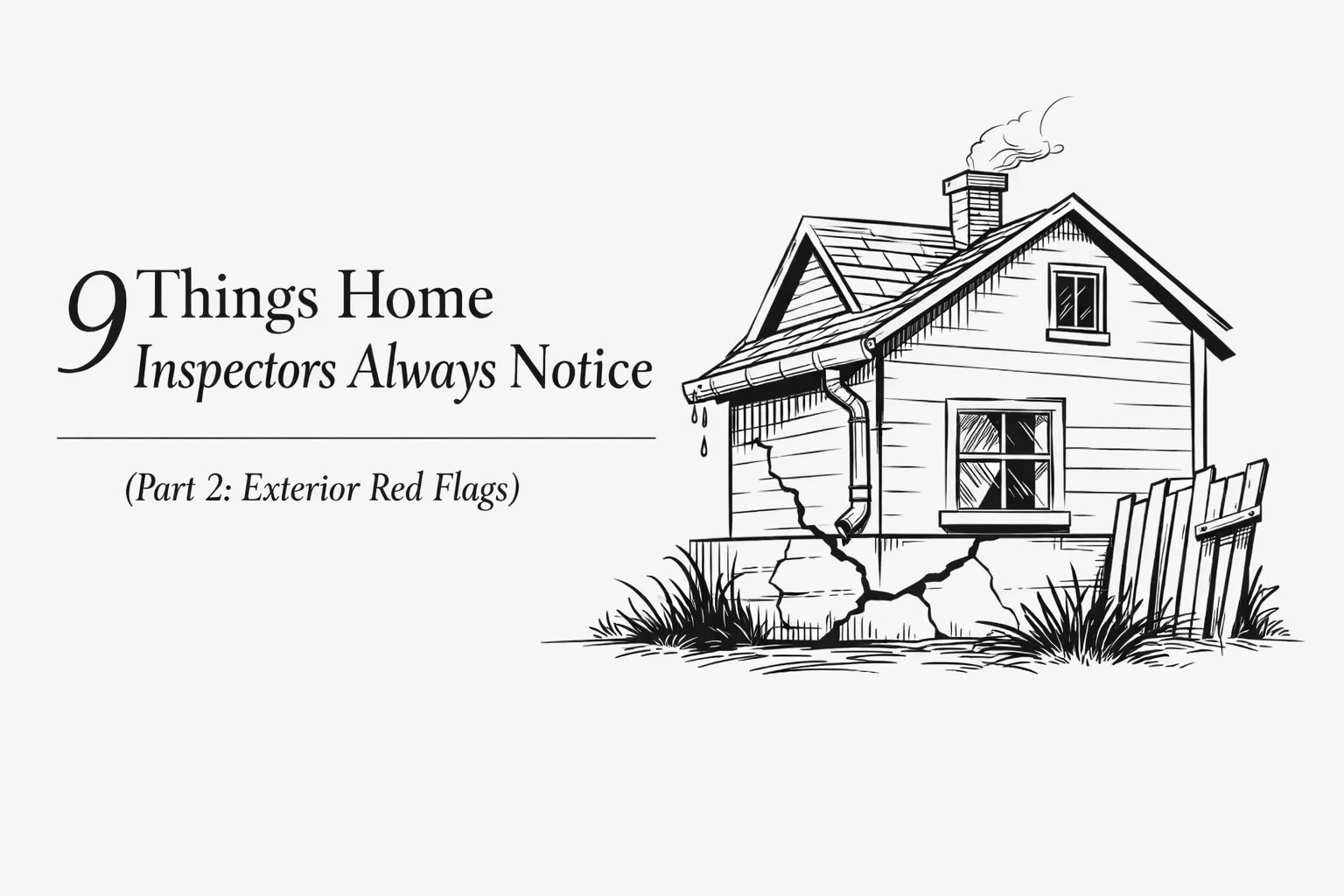
9 Things Home Inspectors Always Notice (Part 2: Exterior Red Flags)
9 Things Home Inspectors Always Notice (Part 2: Exterior Red Flags)
Welcome back to our series on the details that make or break a home inspection! Here at Your Handyman Pros, we’ve seen it all. If you missed Part 1, we covered those sneaky interior red flags like loose handrails and GFCI outlets. Today, we’re stepping outside.
In the Salt Lake Valley, our homes take a beating. From the scorching summer sun in Magna to the heavy snow loads in Herriman, the exterior of your house is its first line of defense. When a home inspector pulls up to the curb, they aren’t just looking at your curb appeal; they’re looking for signs that the "envelope" of your home is failing.
Here are three exterior red flags that show up on inspection reports all the time.
1. Cracked or Damaged Siding
Whether you have vinyl, Hardie board, or wood siding, cracks are a major "no-no." In cities like West Valley City or Sandy, wind-blown debris or even a stray rock from a lawnmower can cause small punctures or cracks.
Why does an inspector care? Because water is patient. It will find that crack, seep behind the panel, and can allow moisture into the wall system, leading to rot, mold, or insulation damage. If you’ve noticed subtle signs your home is looking dated or worn out, the siding is usually the first culprit.
2. Improperly Sloped Soil (Grading)
This is a big one. Inspectors look at the "grade" or the slope of the dirt around your foundation. Ideally, the ground should slope away from your house at least six inches over the first ten feet.
If the soil is flat, or worse, sloping toward the house, rainwater and snowmelt will pool against your foundation. This can lead to foundation moisture issues, basement leaks, and over time, structural damage. If you are prepping for a move in Riverton, walk around your perimeter. If you see "ponding" near the walls, it’s time to move some dirt. We often handle these post-winter home mistakes to ensure homeowners stay dry all year long.
3. Missing Gutter Downspout Extensions
You’d be surprised how many homeowners forget this $15 fix. Your gutters do a great job of collecting water from the roof, but if the downspout dumps that water right at the base of your foundation, the gutter is basically useless.
Inspectors want to see extensions that carry that water at least five to ten feet away from the house. Without them, you’re significantly increasing the risk of water pooling near your foundation. It's one of those 3 small home upgrades in Salt Lake that can save you thousands in a "failed" inspection report later.
Let Your Handyman Pros Help
Don't let a home inspector's report catch you off guard. Whether you need siding repair, a grading adjustment, or a full exterior refresh, our team is here to help. Your Handyman Pros is a licensed B100 General Contractor, and we take pride in helping our neighbors across the Salt Lake Valley keep their homes in tip-top shape.
Stay tuned for Part 3, where we’ll dive into the maintenance red flags that often get overlooked!
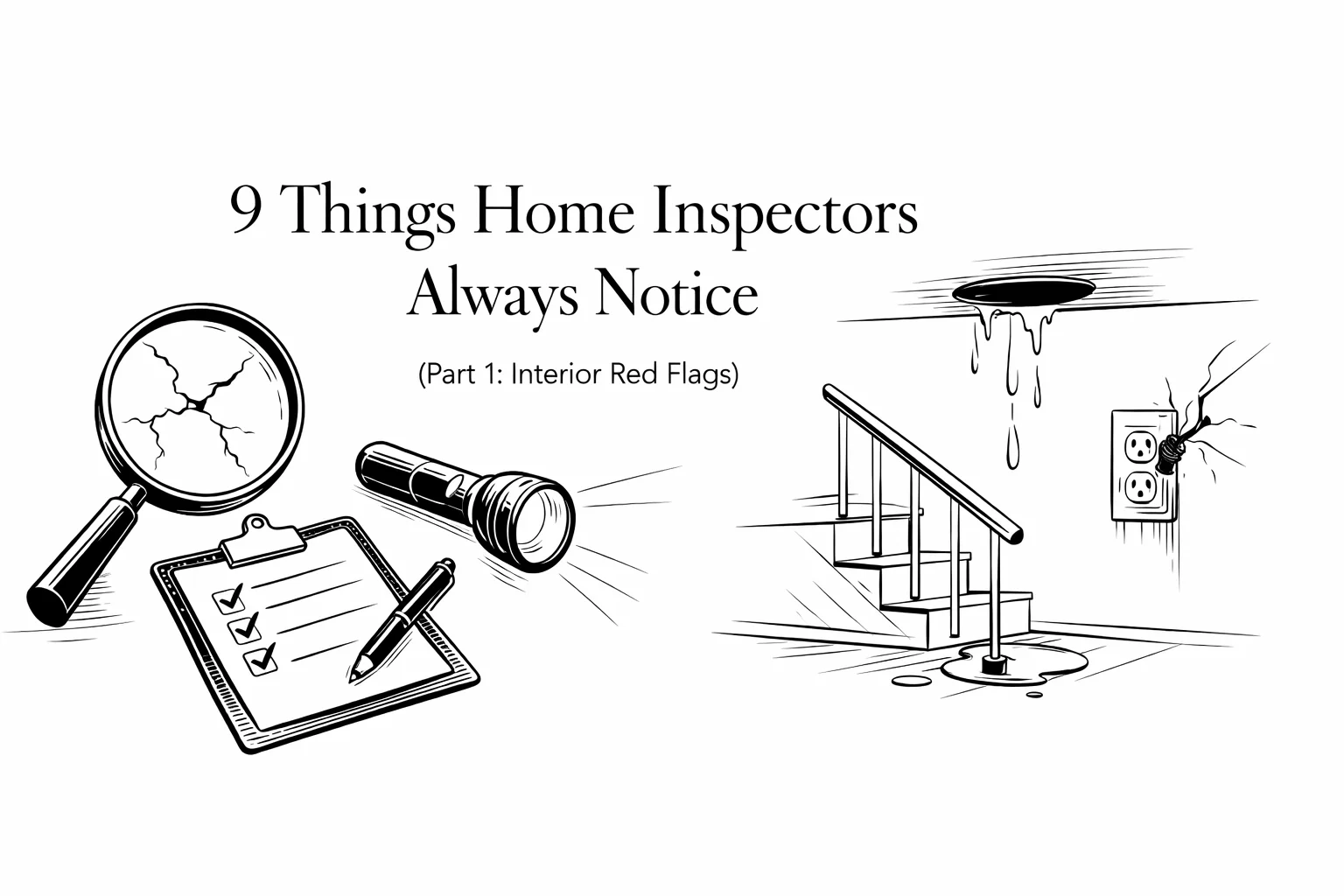
9 Things Home Inspectors Always Notice (Part 1: Interior Red Flags)
9 Things Home Inspectors Always Notice (Part 1: Interior Red Flags)
Selling a home in the Salt Lake Valley is an exciting milestone, but let’s be honest, nothing makes a homeowner break into a cold sweat quite like the home inspection. You’ve scrubbed the baseboards and decluttered the closets, but an inspector is looking for things you might have walked past every day for five years without a second thought.
At Your Handyman Pros, we know that whether you’re in a newer build in Herriman or a charming older home in Magna, certain little things pop up on inspection reports more than anything else. To help you get ahead of the game, we’re starting a three-part series on the 9 things home inspectors always notice.
Today, we’re diving into Part 1: Interior Red Flags.
1. Loose Handrails: A Safety Essential
If you have stairs, you have handrails. Over time, the brackets holding those rails into the wall can wiggle loose. Maybe the kids used it as a jungle gym, or maybe it wasn't mounted into a stud originally.
Inspectors typically check handrails for stability. If it moves even a little bit, it’s going on the report as a safety hazard. This is a big deal for FHA or VA loans especially. Whether you’re in Sandy or Riverton, a sturdy handrail is one of those weekend fixes that builds buyer confidence. It’s an easy fix for a pro, but a major red flag for an inspector.
2. Missing GFCI Outlets in Bathrooms
You know those outlets with the "Test" and "Reset" buttons in the middle? Those are Ground Fault Circuit Interrupters (GFCI). They are designed to shut off power instantly if they detect a surge or moisture, preventing shocks.
Modern building codes require GFCI protection in areas where electricity and water might mix, like bathrooms, kitchens, laundry areas, and other nearby outlets. If your home in West Valley City was built a few decades ago, you might still have standard outlets. An inspector will flag this every single time because it’s a modern safety standard.
Upgrading these is one of those subtle bathroom safety upgrades that makes a huge difference in how "maintained" your home feels to a potential buyer.
3. Slow Draining Sinks
We’ve all dealt with a sink that takes its sweet time to empty. Usually, it’s just a buildup of hair and soap scum, but to a home inspector, a slow drain could signal a deeper plumbing issue or simply a clogged trap.
When an inspector walks through your home, they often turn on all the faucets at once to check the water pressure and drainage. If the master bathroom sink is still holding water five minutes later, it looks like a maintenance failure. Keeping your drains clear is a simple part of any 2026 home maintenance checklist.
Why Fix These Now?
When a buyer sees a list of small interior repairs, they start wondering what bigger things haven't been maintained. Fixing these red flags before the inspector arrives keeps the negotiation in your favor and shows that you’ve truly cared for your property.
If you’re prepping your home for sale, or just want to make sure your family is safe, Your Handyman Pros is here to help. As a licensed B100 General Contractor, we handle everything from tightening handrails to electrical upgrades and plumbing fixes. We serve the entire Salt Lake Valley, from the hills of Sandy to the growing neighborhoods of Herriman.
Don't let a "small" red flag turn into a deal-breaker. Give us a call or visit our website to schedule your pre-inspection tune-up today!

9 Small Repairs That Protect Your Home’s Value: Part 3 - Exterior Protection
9 Small Repairs That Protect Your Home’s Value: Part 3 - Exterior Protection
Hey there, Salt Lake Valley homeowners! We’ve finally reached the finish line of our series on small repairs that make a big difference. We’ve already tackled interior fixes and efficiency improvements, but today we’re stepping outside.
The exterior of your home is your first line of defense against the elements. Between our scorching Utah summers and the heavy snow in the winter, your home’s shell takes a beating. If you’re looking to maintain your property value, or even boost it before a sale, these three exterior repairs are non-negotiable.
7. Repair Cracked Siding
Cracked or warped siding isn't just an eyesore that kills your curb appeal; it’s an invitation for trouble. Whether you have vinyl, wood, or fiber cement siding, damaged siding can allow excessive moisture to reach the wall system behind it. Once water gets back there, you’re looking at hidden moisture problems like rot and mold that are much more expensive to fix than a single plank.
If you just have a few damaged pieces, a handyman in Herriman or Sandy can usually swap those out in a few hours. However, if your siding is failing across the board, that’s a bigger conversation. As a licensed B100 General Contractor, we handle the small stuff with Your Handyman Pros, but if the job scales up to a full siding replacement, we transition that over to Your Contractor Pros. We’ve got you covered either way!
8. Fix Damaged Soffits
The soffit is the underside of your roof’s overhang. It’s one of those things you don't notice until it starts peeling, rotting, or, worst case, becomes a front door for squirrels and birds. Soffits are crucial because they usually contain vents that help your attic breathe. When they’re damaged, your attic’s airflow is compromised, which can lead to ice dams in the winter and higher cooling costs in the summer.
Checking your soffits once a year is a pro move. If you see signs of "chew marks" from pests or water stains, give a Salt Lake handyman a call. Patching a small section now prevents a full-blown structural repair down the road.
9. Seal Driveway Cracks
Utah’s "freeze-thaw" cycle is the enemy of concrete. Water gets into a tiny crack, freezes, expands, and turns that tiny crack into a giant pothole by spring. If you’ve noticed new gaps after this past winter, you aren't alone. Dealing with post-winter pitfalls is a standard part of homeownership in the Salt Lake Valley.
Cleaning out those cracks and filling them with a high-quality masonry sealant is a weekend project that adds years to the life of your driveway. It keeps your entrance looking sharp and prevents that "neglected" look that turns off potential buyers.
Wrap Up: Protecting Your Investment
Whether it’s a quick drywall patch or sealing up your driveway, these "small" repairs are what keep a home in top-tier condition. Taking care of these details shows you value your property, and it ensures that when it’s time to sell, you aren't hit with a massive "to-do" list from a home inspector.
If you’re feeling overwhelmed by your home’s exterior needs, don’t sweat it. Whether you need a home remodel contractor in Utah for a big project or just a reliable hand to knock out some maintenance, we’re here to help.
Stay safe out there, and happy home improving!

9 Small Repairs That Protect Your Home’s Value: Part 2 - Efficiency Improvements
9 Small Repairs That Protect Your Home’s Value: Part 2 - Efficiency Improvements
Hey there, neighbor! Welcome back to our series on protecting your home’s value through the little things that make a big difference.
In Part 1, we talked about those interior cosmetic fixes like drywall and baseboards. Today, we’re shifting gears to something your wallet will love: Efficiency Improvements.
In the Salt Lake Valley, we deal with some pretty wild temperature swings. From blistering summers to snow-heavy winters, your home’s "envelope" is constantly under pressure. If your home is leaking air, you’re literally watching your heating and cooling dollars drift out the window. As a licensed and insured contractor, I can tell you that savvy buyers notice these details during a walk-through.
Here are the next three repairs to tackle.
4. Seal Window Gaps
If you can feel a draft when you stand near your windows, you have an efficiency problem. Over time, the caulking around your window frames can shrink, crack, or pull away. This doesn't just let air out; it can also allow moisture intrusion over time.
A quick bead of high-quality exterior caulk or some fresh weatherstripping can make a world of difference. If you're looking for a handyman in Bountiful Utah to help identify which windows are leaking air, we’ve got the tools to spot those leaks before they spike your Questar or Rocky Mountain Power bill.
5. Replace Worn Door Sweeps
Your front door is the handshake of your home. But if the rubber sweep at the bottom is torn or flattened, it’s also an open invitation for dust, bugs, and cold air. Replacing a door sweep is a "small" repair that offers immediate gratification.
This is often a problem in older homes in areas like Magna and West Valley City. It’s a 15-minute fix that makes your entryway feel tighter and more secure. While you're at it, check the weatherstripping around the sides of the door too. If you see light peeking through the edges when the door is closed, it's time for an upgrade.
6. Upgrade Attic Insulation Access
Most homeowners in the Salt Lake Valley have plenty of insulation in their attics, but they forget about the "hole" in the ceiling, the attic hatch. Most attic scuttle holes are just a piece of drywall or plywood sitting on a frame. Because warm air rises, an unsealed attic hatch can act like a chimney for heated air.
Upgrading your attic access involves adding a foam gasket to seal the perimeter and attaching rigid foam insulation to the top of the hatch board. It’s one of those 3 small home upgrades that pays for itself in a single season.
Why These "Small" Fixes Matter
It’s simple: a home that is well-maintained on a granular level tells a story of pride and care. When it comes time to sell or even just get an appraisal, a home that is draft-free and efficient holds its value much better than one with "deferred maintenance."
Whether you need a handyman in Sandy Utah to knock out a whole list of efficiency repairs or you’re planning a larger project like a bathroom remodel, we’re here to help. At Your Handyman Pros, we treat every small repair with the same professional standard we bring to major renovations.
Stay tuned for Part 3, where we head outside to look at Exterior Protection!

9 Small Repairs That Protect Your Home’s Value: Part 1 - Interior Fixes
9 Small Repairs That Protect Your Home’s Value: Part 1 - Interior Fixes
When most people think about "increasing home value," they picture gutting a kitchen or adding a three-car garage. While those big projects are great, as a home repair Salt Lake specialist, I’ve seen time and again how the "small stuff" can actually make or break a sale or an appraisal.
Your Handyman Pros is a licensed B100 General Contractors that lives by a simple motto: No job is too big or too small. Whether you’re in Herriman, Riverton, or Sandy, those tiny interior eyesores can signal to a guest (or a buyer) that a home hasn't been well-maintained.
In this first part of our three-part series, we’re looking at three interior fixes that pack a major punch for your home’s value and feel.
1. Repair Drywall Dents and Cracks
Whether it’s a doorknob that swung too hard, a leftover hole from a TV mount, or those "settling cracks" that appear over doorways, damaged drywall is one of the first things people notice when they walk into a room. In the Salt Lake Valley, seasonal freeze-thaw cycles and normal settling can cause homes to shift slightly, leading to those annoying hairline cracks.
While a small crack might seem cosmetic to you, to a potential buyer, it can scream "foundation issues," even if it’s just standard settling. Patching, sanding, and color-matching paint is a quick fix that restores the "new home" feel instantly. If you’re looking for a drywall repair Sandy expert or need help in West Valley City, we can get those walls looking smooth as silk in no time.
2. Fix Squeaky Doors and Hinges
Nothing makes a house feel "old" faster than a door that groans like it’s in a haunted mansion. Squeaky hinges are usually a sign of metal-on-metal friction that has worn away the lubrication, or a hinge that has slightly pulled away from the frame.
Beyond the noise, doors that don’t latch properly or hang crookedly are a major annoyance. Sometimes it’s a simple lubrication fix, but other times the house has shifted and the strike plate needs to be moved. As your go-to Utah Valley handyman, we can zip through your house and quiet every door. It’s a small detail, but the silence feels like luxury. Check out our post on 3 weird house noises explained if your home is talking back to you!
3. Replace Worn Baseboards
Baseboards are the "frame" for your floors. Over time, they take a beating from vacuum cleaners, pet chewing, and mopping moisture. Scuffed, dented, or water-damaged baseboards make even the cleanest floors look dingy.
Upgrading from standard, narrow baseboards to a taller, more modern profile is one of the most cost-effective ways to make a room feel "custom." If your current trim is just looking a bit tired, a fresh coat of semi-gloss white paint can do wonders. If you're tackling this, you might also want to look at 6 small details that make homes look outdated to see what else might need a refresh.
Why Small Repairs Matter
"Weekend fixes" have the potential to build buyer confidence. When a home is tight, quiet, and smooth, it sends a message that the big stuff: the HVAC, the roof, the plumbing: has been cared for too.
Don’t let a "to-do" list hold your home’s value back. Whether you need a handyman in Herriman or a contractor in Salt Lake Valley, Your Handyman Pros is here to help.
Stay tuned for Part 2, where we’ll talk about efficiency improvements that save you money while protecting your investment!

6 Mistakes You're Making with Your Kitchen Remodel: Part 2
6 Mistakes You're Making with Your Kitchen Remodel: Part 2
Hey there, neighbors! Welcome back to the second half of our kitchen remodel deep-dive! If you missed Part 1, we talked about the big-picture stuff like layout, storage, and why those super-trendy finishes might break your heart (and your budget) in a few years.
Today, we’re getting into the "guts" of the kitchen. These are the things people often overlook because they aren't as flashy as a marble countertop, but man, do they make a difference in how your home actually feels. Whether you’re in Herriman, Riverton, or Sandy, these tips will save you a lot of headaches during your next renovation.
4. Ignoring Lighting Layers
One of the biggest mistakes I see in Salt Lake Valley homes is the "one-and-done" lighting approach. People put a single large dome light in the middle of the ceiling and wonder why the kitchen feels gloomy or why they’re chopping veggies in their own shadow.
To get it right, you need three layers:
Task Lighting: This is the most important. Think under-cabinet LEDs that shine right on your workspace or bright pendants over the island.
Ambient Lighting: This is your general overhead light that fills the room.
Accent Lighting: This is the "fancy" stuff: lights inside glass-front cabinets or toe-kick lighting that makes the floor glow at night.
Good lighting makes even a small kitchen feel huge. If you're looking for ways to brighten things up without a full gut-job, check out our guide on details that make a home feel custom.
5. Forgetting About Electrical Needs
Kitchens in 2026 use a lot of "juice." Between the air fryer, the espresso machine, and the three different tablets charging on the counter, your old electrical setup might not cut it.
Many homeowners in Magna and West Valley City might finish a beautiful remodel only to realize they don't have enough outlets where they actually need them. You want to plan for:
Dedicated Circuits: High-draw appliances like your fridge, microwave, and dishwasher are typically placed on dedicated circuits.
Pop-up Outlets: These are great for islands where you don’t want a wall outlet ruining the side of your custom cabinetry.
Code Compliance: This isn't just about convenience; it's about safety. As a licensed and insured contractor, we work with licensed electricians to make sure everything is up to modern standards so you don't run into ignored safety hazards later.
6. Cutting Corners on Installation
I love a good DIY project as much as the next guy, but the kitchen is the one place where "close enough" usually isn't. If cabinets aren’t level, it can cause problems when installing stone countertops and other finishes. If your backsplash isn't symmetrical, it’ll be the only thing you see every time you walk into the room.
Professional finish work is what separates a "remodel" from a "transformation." At Your Handyman Pros, we pride ourselves on the details. Whether it's a kitchen facelift with new hardware and trim or a full-scale renovation, the installation is where the value is built.
Why Choose Your Handyman Pros?
We aren't just guys with a truck. We are a licensed and insured general contractor serving the entire Salt Lake Valley. We live here, we work here, and we want your kitchen to be something you’re proud to show off to the neighbors.
If you’re ready to stop dreaming and start building, give us a shout. We’d love to help you avoid these mistakes and build a kitchen that actually works for your life.
Stay safe out there, and happy remodeling!

6 Mistakes You're Making with Your Kitchen Remodel: Part 1
6 Mistakes You're Making with Your Kitchen Remodel: Part 1
Hey there, Salt Lake Valley homeowners! If you’ve been scrolling through Pinterest or HGTV lately, you’re probably itching to tear out those old honey-oak cabinets and start fresh. We get it. A kitchen remodel is one of the most exciting projects you can take on. It’s the heart of the home, the place where Sunday morning pancakes happen and where everyone ends up congregating during a party.
However, as a licensed and insured contractor, we’ve seen our fair share of "oops" moments. A kitchen isn't just a showroom; it’s a workspace. When you prioritize a "vibe" over actual function, you end up with a beautiful room that’s a total pain to cook in.
Today, we’re kicking off a two-part series on the biggest blunders we see in the Salt Lake Valley. Let’s dive into the first three mistakes you might be making.
1. Prioritizing Looks Over Layout (The "Work Triangle" Struggle)
We’ve all seen those massive, sprawling kitchens in magazines. They look amazing, right? But if your refrigerator is twenty feet away from your stove, you’re going to be exhausted just trying to make a grilled cheese sandwich.
The "Work Triangle" is a classic kitchen design principle that still helps many layouts work efficiently. It connects your three main work areas: the sink, the stove, and the refrigerator. If these points are too far apart, you’re wasting steps. If they’re too close, you’re bumping into whoever is trying to help you chop veggies.
In places like Herriman and Riverton, where many newer homes have large open floor plans, it’s easy to get carried away with a massive island that actually blocks the flow. Before you pick out your backsplash, make sure your layout makes sense for how you actually move. If you’re feeling stuck, checking out some pro tips on layout and project planning can save you a massive headache later.
2. Not Planning Enough Storage (Thinking Beyond Cabinets)
"I have too much storage space," said no homeowner in Sandy, Utah, ever.
One of the biggest mistakes people make is simply replacing their old cabinets with newer versions of the exact same size. A modern kitchen needs to work harder than that. You need a dedicated spot for the air fryer, the stand mixer, and that giant Costco-sized box of snacks.
When we work on kitchen remodels in West Valley City or Magna, we encourage homeowners to think vertically. Take those cabinets all the way to the ceiling! Not only does it look more custom, but it gives you a place for those items you only use once a year (looking at you, Thanksgiving turkey platter). Don’t forget about specialized storage like deep drawers for pots and pans or pull-out spice racks.
3. Choosing Trendy Finishes Over Durable Ones
We know, those matte black faucets and ultra-glossy cabinets look sharp right now. But will they look good in five years? More importantly, will they survive the daily wear and tear of a busy Utah household?
In the Salt Lake Valley, we have to deal with hard water issues that can make certain finishes look spotted and dingy within weeks. Choosing a high-maintenance countertop like marble might seem like a dream, but if you actually cook with lemon juice or wine, you might regret it when it stains or etches.
We always recommend choosing "timeless" over "trendy" for the big-ticket items. You can always swap out your hardware or light fixtures later if you want a fresh look. It's much cheaper than replacing an entire countertop. If you want to see how small changes can make a big impact without a full gut-job, check out our guide on kitchen facelifts with hardware and trim.
Let’s Get It Right the First Time
Whether you’re in Salt Lake City or down in Riverton, a kitchen remodel is a huge investment. You deserve a space that is as functional as it is beautiful. As a licensed GC, Your Handyman Pros is here to help you navigate these choices so you don’t end up on a "Remodel Fails" list.
Stay tuned for Part 2, where we’ll talk about lighting, electrical needs, and why you should never cut corners on installation.
Need help planning your next project? Give us a shout! We’re proud to be recognized among the best in the business.

6 Small Details That Make Homes Look Outdated: Part 2
6 Small Details That Make Homes Look Outdated: Part 2
Welcome back to our series on the little things that have a big impact on your home’s vibe. If you missed Part 1, we covered cabinet hardware, switch plates, and builder-grade lighting. Today, we’re finishing our list of the six subtle culprits that make a house feel stuck in the past.
Living in the Salt Lake Valley, we see a lot of "builder-grade" homes. These houses are great, but they often come with the bare minimum finishes that can start to look tired after a few years. If you’re in Sandy, Riverton, or West Valley City and looking to freshen things up, here are the final three details to check.
4. Thin Baseboards and Trim
Nothing screams "basic builder-grade" like skinny, 2.5-inch baseboards. In the 90s and early 2000s, thin trim with simple builder-grade profiles were the standard. Today, those narrow strips of wood make a room look unfinished and smaller than it actually is.
Modern home design favors taller, flatter profiles. Swapping out those thin boards for 5-inch or even 7-inch baseboards adds immediate "weight" and architectural interest to a room. It makes the space feel more custom and high-end. If you are already looking for details that make a home feel custom, start with the trim.
5. Worn or Outdated Door Handles
Take a walk through your house and look at your door handles. Are they that specific shade of shiny, "fake" gold brass that was popular thirty years ago? Or maybe they’re scratched, loose, and rattle every time you close the door?
Worn hardware is one of those subtle signs your home is looking dated. Even if you have "modern" finishes like matte black, if the finish is peeling or the lever is sagging, it drags down the whole look. Switching to a consistent style, like a sleek lever in brushed nickel or a classic bronze knob, can unify your entire hallway. It’s a project that sounds small but feels like a massive upgrade once it’s done.
6. Mismatched Outlet Covers
Over the years, many homeowners often replace a single outlet or cover without matching the rest of the room. You end up with a "quilt" of covers: one is bright white, one is ivory (which usually just looks like dirty white), and one might be a decorative metal plate from a previous decade.
Mismatched outlet covers and switches make a room look cluttered and neglected. Ensuring every outlet and switch in a room matches, not just in color, but in style (like modern "rocker" switches), creates a clean, intentional look. It’s one of those weekend fixes that boost buyer confidence if you're thinking about selling.
Your Salt Lake Valley Experts
Refreshing these details might seem like a lot of DIY work, but that’s where we come in. Whether you need a full kitchen facelift with new hardware and trim or you just want someone to swap out forty light switches in Herriman or Magna, we’ve got your back.
At Your Handyman Pros, we aren't just "handy": We are a licensed and insured contractor. Being a licensed GC means we bring professional standards to every small repair and large renovation across the Salt Lake Valley.
Don't let these small details quietly tank your home's value. If you're ready to modernize your space without a full-scale demolition, give us a shout. We’d love to help you cross these items off your to-do list!

6 Small Details That Make Homes Look Outdated: Part 1
6 Small Details That Make Homes Look Outdated: Part 1
Hey there, Salt Lake Valley neighbors!
We’ve all been there: you walk into your kitchen or living room and something just feels... off. You’ve got the nice furniture, the rug looks great, and the paint is relatively fresh, but the space still feels like it’s stuck in a previous decade. Usually, it’s not the big stuff like the layout or the flooring that’s the culprit. It’s the small, "invisible" details we look at every day but stop seeing.
As a licensed general contractor, we've noticed a few recurring offenders that quietly age a house. The good news? These are some of the easiest and most affordable things to fix.
Here is Part 1 of our series on the small details that might be dating your home.
1. Old Cabinet Hardware
If you’re still rocking the shiny, polished brass handles with the ornate floral etchings from 1994, it’s time for an intervention. Nothing screams "builder grade" quite like outdated hardware. Even if your cabinets are in great shape, old knobs and pulls can make the whole room feel tired.
Currently, we’re seeing a huge shift toward matte black, brushed nickel, or even champagne bronze for a more modern, high-end look. It’s one of the fastest ways to give your kitchen a facelift without the cost of a full remodel. If you're in Sandy or Riverton and looking to refresh your space, check out our guide on kitchen facelifts and hardware.
2. Yellowed Light Switch Plates
This is one of those details that you don't notice until you really look at it. Over time, the plastic in older white light switch plates and outlet covers reacts to UV light and oxygen, turning a dingy shade of beige or yellow. Even if you scrub them, they still look "dirty."
In many older homes in West Valley City and Magna, these yellowed plates stick out like a sore thumb against a fresh coat of white or gray paint. Replacing these with crisp, bright white plates (or even modern screwless versions) is a quick and inexpensive project that makes a massive difference in how clean and updated your home feels. It's a subtle sign that a home is looking dated, but luckily, it's a cheap fix.
3. Builder-Grade Lighting Fixtures
We’ve all seen them: the generic, frosted glass dome lights that come standard in every hallway and bedroom. While they’re functional, they lack personality and tend to collect a visible layer of dust and dead bugs over time.
Upgrading these basic flush-mount fixtures for something with a bit more character, like a low-profile LED disk, a modern lantern style, or a sleek semi-flush mount, can completely change the vibe of a room. It shifts the focus from "standard utility" to "intentional design." Whether you’re prepping for a sale or just want to enjoy your space more, details make a home feel custom.
Why These Small Changes Matter
You don't always need a sledgehammer to improve your home's value or aesthetic. Often, it’s about the "finish work." At Your Handyman Pros, we specialize in these types of home repairs and upgrades across the Salt Lake Valley. Whether you need a licensed and insured contractor to swap out every light fixture in the house or just someone to help with those tricky repairs, we’ve got your back.
Keep an eye out for Part 2, where we’ll dive into baseboards, door handles, and those pesky mismatched outlet covers!
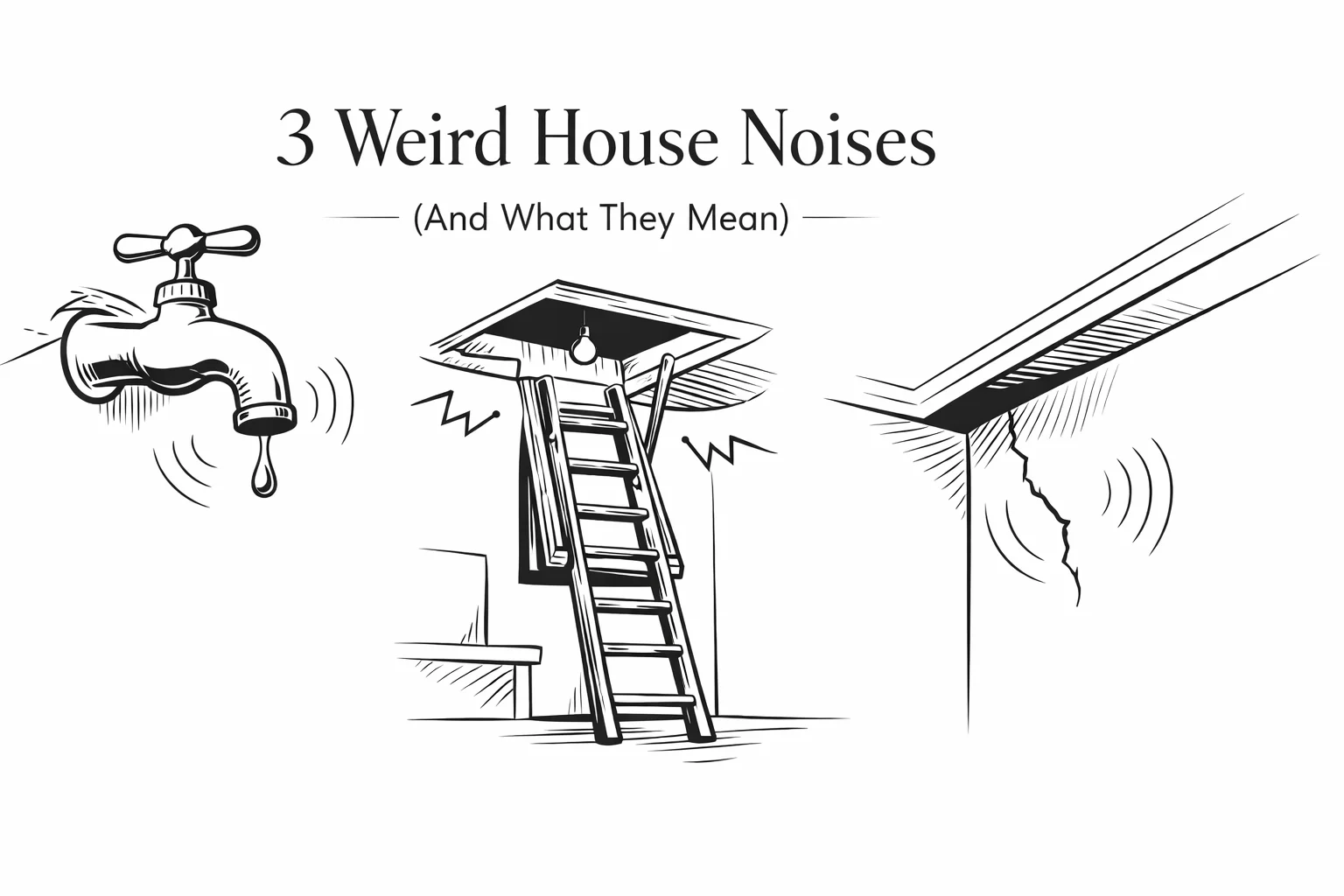
3 Weird House Noises (And What They Mean)
3 Weird House Noises (And What They Mean)
Have you ever been sitting in your living room in Sandy or West Valley City, enjoying a quiet evening, when suddenly... POP! It sounds like someone just threw a pebble at your wall? Or maybe you turn off the kitchen faucet in your Riverton home and hear a rhythmic thump-thump-thump echoing through the floorboards?
Before you call a ghost hunter, take a deep breath. Houses are living, breathing structures (in a sense), and they have a lot to say. At Your Handyman Pros, we’ve helped homeowners across the Salt Lake Valley track down these mysterious bumps in the night. Most of the time, it’s not a poltergeist; it’s just physics, plumbing, or your HVAC system asking for a little TLC.
Here are three of the most common "weird" house noises and what they actually mean for your home.
1. Popping or Creaking Walls
If you live in Herriman or Magna, you know our temperatures can swing wildly between a sunny afternoon and a crisp Utah night. When your house gets hit by that temperature shift, the materials inside it: wood framing, drywall, and even metal siding: begin to expand or contract.
This phenomenon is called thermal expansion. As the wood studs in your walls heat up or cool down, they move slightly against each other or against the fasteners holding them together. That sudden crack or pop is usually just the sound of building materials shifting slightly. While it's usually harmless, frequent or loud popping can sometimes be linked to 10 small issues that quietly tank your home’s value if it leads to visible drywall cracks.
2. Banging or Knocking Pipes
Does your plumbing sound like a drum set every time the washing machine stops? This is commonly known as "water hammer." It happens when a flow of water is shut off abruptly, causing a pressure wave that travels through the pipes.
Another culprit for that knocking sound is loose pipe straps. Over time, the brackets that hold your copper or PEX lines to the floor joists can loosen. When water rushes through, the pipe vibrates and bounces against the wood. If you're hearing this regularly, it’s worth a look. Repeated vibrations can eventually contribute to leaks, and trust us, a slow leak is much more expensive to fix than a loose strap! Check out our repair vs. replace guide to see when it's time to call in the pros.
3. HVAC Clicking and Whirring
Your furnace and AC are the heart of your home comfort, but they shouldn't sound like they’re falling apart.
Repeated Clicking: If your furnace clicks several times before the heat actually kicks on, it could indicate an ignition problem or sensor issue. This is a safety issue that needs an expert eye immediately.
Rapid Rattling: This often sounds like a playing card in bicycle spokes. It usually means a piece of debris or a loose component in the blower assembly.
Ignoring these sounds can lead to a total system failure right when you need it most.
Why It Matters
Ignoring "small" noises is a form of procrastination that often ends in a larger repair bill. Whether you’re in Salt Lake City or the south end of the valley, staying on top of these sounds keeps your home safe and your investment secure.
At Your Handyman Pros, we handle everything from tightening those noisy pipes to fixing the drywall cracks caused by your house's "growing pains." Don’t let those weird noises keep you up at night. Give us a call, and let’s get your home back to being "the strong, silent type."
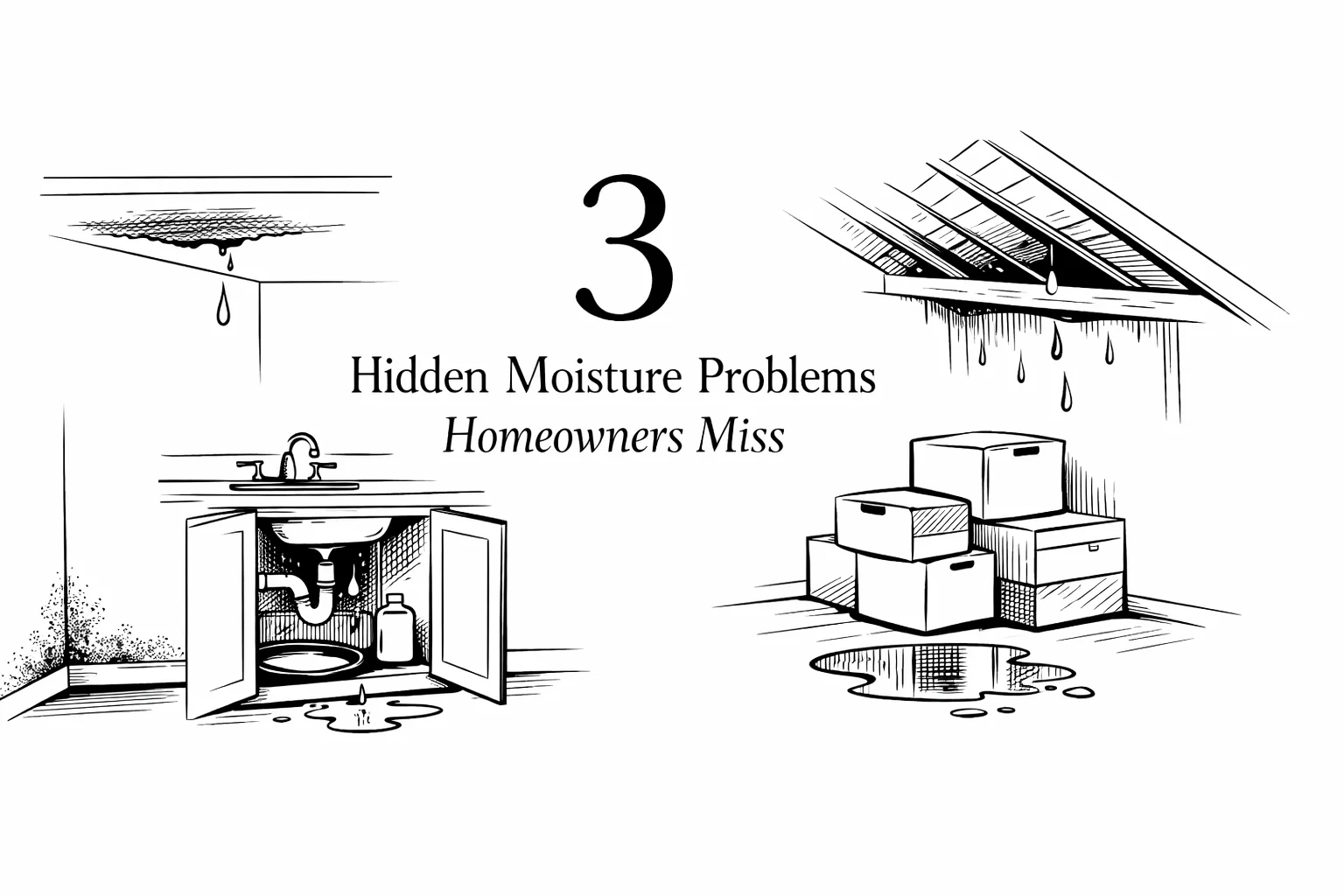
3 Hidden Moisture Problems Homeowners Miss
3 Hidden Moisture Problems Homeowners Miss
Hey there, Salt Lake Valley neighbors! Even in Utah’s dry climate, moisture can still become a major problem inside homes. Whether you’re in Herriman, Riverton, or right in the heart of West Valley City, moisture is the silent enemy of a solid home.
At Your Handyman Pros. Often, by the time a homeowner calls us for a home repair in Salt Lake, the damage has been brewing behind the scenes for months. Today, I want to highlight three hidden moisture problems that often fly under the radar until they become expensive projects.
1. Bathroom Fan Failures (More Than Just a Hum)
We’ve all walked into a bathroom after a hot shower and seen the walls "sweating." You flip on the fan, hear it whirring, and figure everything is fine. But here’s the kicker: just because it’s making noise doesn’t mean it’s working.
As a Salt Lake handyman, we know vents can either get clogged with dust or, even worse, vent directly into the attic space instead of outside. When that humid air has nowhere to go, it settles on your drywall and studs, which can eventually lead to mold growth. If you notice your paint peeling or dark spots appearing near the ceiling, it’s time to look closer.
2. Attic Condensation and the "Hidden Rain"
This is a big one for us in the Utah Valley. During our freezing winters, warm air from your living space rises. If your attic insulation is thin or your ventilation is blocked, that warm air hits the underside of your freezing roof deck and turns into water. This is essentially "raining" inside your attic.
This hidden moisture leads to wood rot in your rafters and can even cause ice dams that tear up your shingles. If you aren't sure if your attic is breathing right, we can help. Whether it's a quick fix from Your Handyman Pros or a larger structural upgrade through Your Contractor Pros, we make sure your home stays dry from the top down.
3. Leaking Hose Bibs: A Foundation Problem Waiting to Happen
Now that the weather is shifting, everyone is head-out into the yard in Sandy or Magna to get their gardens ready. But have you checked your outdoor faucets (hose bibs) lately?
A tiny, slow drip from a hose bib might not seem like much, but if it leaks into the wall cavity or pools against your foundation, you could eventually be looking at costly repairs. Plus, in our desert climate, those high water bills add up fast! Checking for leaks now can save you a massive headache later this summer.
Why Experience Matters
At the end of the day, your home is your biggest investment. We're a licensed B100 General Contractor , which means we bring professional expertise to every single call.
One thing we tell all our clients: no job is too big or too small. If you just need a fan replaced or a leaky faucet fixed, Your Handyman Pros is your go-to. If those hidden moisture problems have turned into a need for a full-scale renovation or structural repair, Your Contractor Pros handles the heavy lifting.
Don’t let a little moisture turn into a mountain of debt. From post-winter pitfalls to general maintenance, we’re here to keep the Salt Lake Valley standing strong.
Give us a shout if you’ve noticed anything suspicious around your house. We'd love to help you keep your home in tip-top shape!