

Pro Tips & Projects
Smart fixes. Real projects. Straight talk from your local pros.
Keeping a home running smoothly is a full-time job — and most people don’t have the time, the tools, or the patience to figure it all out. That’s where we come in.
Welcome to your go-to hub for expert tips, real project breakdowns, money-saving strategies, and homeowner how-tos — all written in clear, real-world language, never contractor-speak.
Whether you’re trying to stay ahead of problems, plan a remodel, or avoid getting ripped off, you’ll find exactly what you need right here… from pros who do this every day.
No fluff. No guesswork. Just straight-up help you can use.
What You’ll Find Here:
Pro Tips to extend the life of your home
DIY-Friendly Fixes anyone can handle safely
Project Breakdowns from real jobs we've completed
Money-Saving Advice to avoid costly mistakes
Before & After Transformations to spark ideas
Seasonal Checklists to keep your home in top shape
Need Personalized Advice?
If you ever want help with a repair, a renovation idea, or just a second opinion, we’re only a message away.

Looks Fine, Isn't Fine Part 2: “Normal” Wear That Actually Isn’t
Looks Fine, Isn't Fine Part 2: “Normal” Wear That Actually Isn’t
We’ve all been there. You’re walking through your home in Sandy or heading out the door in Bountiful, and you notice something a little… off. Maybe the front door needs an extra push to latch, or there’s a small crack above the hallway arch that wasn’t there last summer.
Your first instinct is usually, “It’s just an old house thing,” or “Utah weather is doing its thing.” While our Salt Lake Valley climate, with dry summers and snowy winters, does put stress on homes, some “wear and tear” is not actually normal. It is your home giving you an early warning.
In Part 2 of our “Looks Fine, Isn’t Fine” series, we’re breaking down the quirks homeowners often ignore that may signal it’s time to call a handyman in Sandy or take a closer look at potential structural issues.
1. The Stubborn Door: More Than Just Humidity
Some homeowners find themselves thinking, “That door only sticks when it rains.” Seasonal swelling is real, but if your door regularly sticks, drags, or refuses to latch, there may be more going on.
When a door stops working properly, it usually means the frame is no longer perfectly square.
Common causes include:
Humidity and seasonal movement: Wood expands and contracts, but well-sealed doors should still function normally
Framing shift over time: Homes naturally settle, especially in newer construction
Foundation movement: If the issue appears suddenly and is paired with wall cracks, it may point to uneven settling
If it is a hinge adjustment or minor trimming, that is a straightforward fix. If the frame itself is shifting, it may require a deeper evaluation.
2. Hairline Cracks in Drywall: The “Silent” Storytellers
A small crack above a door or window is easy to ignore. Many homeowners plan to patch it during their next paint job. Before you do, it is worth looking at the pattern and behavior of the crack.
Some minor cracking is common in Utah homes due to seasonal movement. However, certain signs suggest a larger issue.
Watch for:
Cracks wider than about 1/8 inch
Diagonal cracks, especially near doors and windows
Cracks that return after being repaired
These patterns can indicate ongoing movement rather than one-time settling. That does not always mean a major structural problem, but it does mean it is worth investigating before simply covering it up.
3. Loose or Wobbly Fixtures: The Hidden Water Risk
A slightly loose faucet or a toilet that rocks just a bit often gets pushed to the bottom of the to-do list. It feels minor, but movement in fixtures is often tied to wear in mounting points or moisture issues.
Common problem areas:
Wobbly toilets: Movement can weaken the seal at the base, allowing small amounts of water to escape over time
Loose faucets: Water can seep beneath the fixture and into cabinetry
Unstable railings: Often a sign that mounting points are worn or the material beneath has weakened
Left alone, these small issues can lead to larger repairs, especially when moisture is involved.
Why “Wait and See” Is Risky in Utah
In areas like Sandy and Bountiful, homes deal with constant environmental stress. Soil movement, moisture changes, and seasonal temperature swings all play a role.
What looks like normal wear can sometimes be the early stage of a more expensive repair. That does not mean every issue is serious, but it does mean it is worth checking before it worsens.
At Your Handyman Pros, we focus on catching problems early. As a licensed and insured contractor, we have helped homeowners across the Salt Lake Valley stay ahead of costly repairs.
Closing Thought
Not every quirk is a problem, but some are.
If you’re in Sandy, Bountiful, or anywhere in the Salt Lake Valley, we can help you figure out whether something is just cosmetic or worth addressing.
Stay tuned for Part 3, where we break down the issues homeowners tend to ignore for too long, like slow drains and exterior gaps that quietly cause damage.

Looks Fine, Isn't Fine Part 1: Cosmetic Issues That Hide Real Damage
Looks Fine, Isn't Fine Part 1: Cosmetic Issues That Hide Real Damage
We’ve all been there. You’re walking through your hallway in Sandy or sitting in your living room in Riverton, and you spot a tiny bubble in the paint. Or maybe the caulk around the tub looks a little… crunchy. You think, “I’ll get to that next spring. It’s just cosmetic.”
As a licensed B100 General Contractor here in the Salt Lake Valley, we're here to be the bearer of slightly annoying, but ultimately money-saving news. In home maintenance, “cosmetic” is often just a polite way of saying “early warning sign.”
Welcome to Part 1 of our new series, “Looks Fine, Isn’t Fine.” Today, we’re pulling back the curtain on surface-level issues that are actually asking for a Salt Lake handyman before they turn into a full-blown renovation nightmare.
1. Paint That’s Peeling, Bubbling, or Flaking
In a climate like ours, where we swing from freezing winters to intense summer heat, paint has a tough job. But when it starts bubbling or peeling, it is rarely just cheap materials.
In Salt Lake Valley homes, bubbling paint is often a sign of trapped moisture.
Paint acts as a seal. When moisture gets behind it, whether from a slow pipe leak, high humidity in a poorly ventilated bathroom, or water intrusion through an exterior wall, it has nowhere to go. That pressure creates bubbles. By the time paint begins to flake, the drywall underneath has often been exposed to moisture for quite a while.
If you’re seeing this in a bathroom or kitchen, it may point to poor ventilation or a hidden leak. Left alone, this can lead to drywall deterioration and mold growth.
Before repainting, it’s worth identifying the source. You can also check out our guide on visual home warning signs to see if that “ugly paint” is actually a plumbing issue.
2. Caulk That’s Cracking, Separating, or Shrinking
Caulk is one of the most important moisture barriers in your home. It keeps water where it belongs. Because it is inexpensive and easy to overlook, many homeowners in West Valley City and Herriman ignore it until it starts failing.
If caulk is cracking or pulling away from a tub, backsplash, or window frame, it is no longer doing its job.
It may seem like a tiny gap, but water adds up fast. Repeated exposure from showers or sink use allows moisture to slip behind surfaces, where it can travel along studs or soak into subflooring. It's possible for bathroom floor “soft spots” that start as a simple caulk failures to turn into major structural repairs.
Exterior caulk failures can be just as serious. Wind-driven rain and melting snow in the Salt Lake Valley can work their way into those gaps, causing hidden damage that often goes unnoticed until trim begins to fail.
If your caulk looks dried out or separated, it’s time to address it.
3. Slightly Warped Trim or Baseboards
Have you ever noticed baseboards pulling slightly away from the wall? Or trim joints that no longer line up cleanly?
Wood reacts to moisture. When trim absorbs water, it expands, shifts, and can begin to warp. Even subtle changes near bathrooms, kitchens, or exterior walls can indicate past or ongoing moisture exposure.
If baseboards begin to curve or “cup,” it is more than a cosmetic issue. It is often a sign of water intrusion that needs to be investigated.
Summary Checklist for Salt Lake Homeowners
The Bubble Test: Press on paint bubbles. Soft or brittle areas may indicate moisture behind the surface.
The Gap Check: Inspect tub and shower corners. If gaps are visible or widening, the seal has failed.
The Baseboard Line Test: Look along your baseboards for bowing or separation that could point to moisture exposure.
Don’t wait until a cosmetic issue becomes a structural repair.
If you’re in Herriman, Riverton, Sandy, or anywhere in the Salt Lake Valley, give us a call. It is always easier and more affordable to fix a small problem early than to deal with major repairs later.
Stay tuned for Part 2, where we break down “normal” wear and tear that may actually be your home trying to tell you something more serious is going on.
“That’s Not Normal” Home Warning Signs Part 3: Visual Red Flags You’re Overlooking
“That’s Not Normal” Home Warning Signs Part 3: Visual Red Flags You’re Overlookin
If your house is making noise, it’s already asking for help. But sometimes, your home is a bit more passive-aggressive. Instead of screaming with a creaking floorboard or a groaning pipe, it just sits there and develops a "look."
We’ve all done it, you walk past that one weird crack in the drywall for six months until it basically becomes part of the decor. You might even name it. But here at Your Handyman Pros, we’re here to tell you that your house is trying to tell you something, and it’s usually: "Hey, fix this before it costs you five grand."
As a premier Utah Valley handyman service, we’ve seen it all. From Herriman to Sandy, here are the visual red flags you should never ignore.
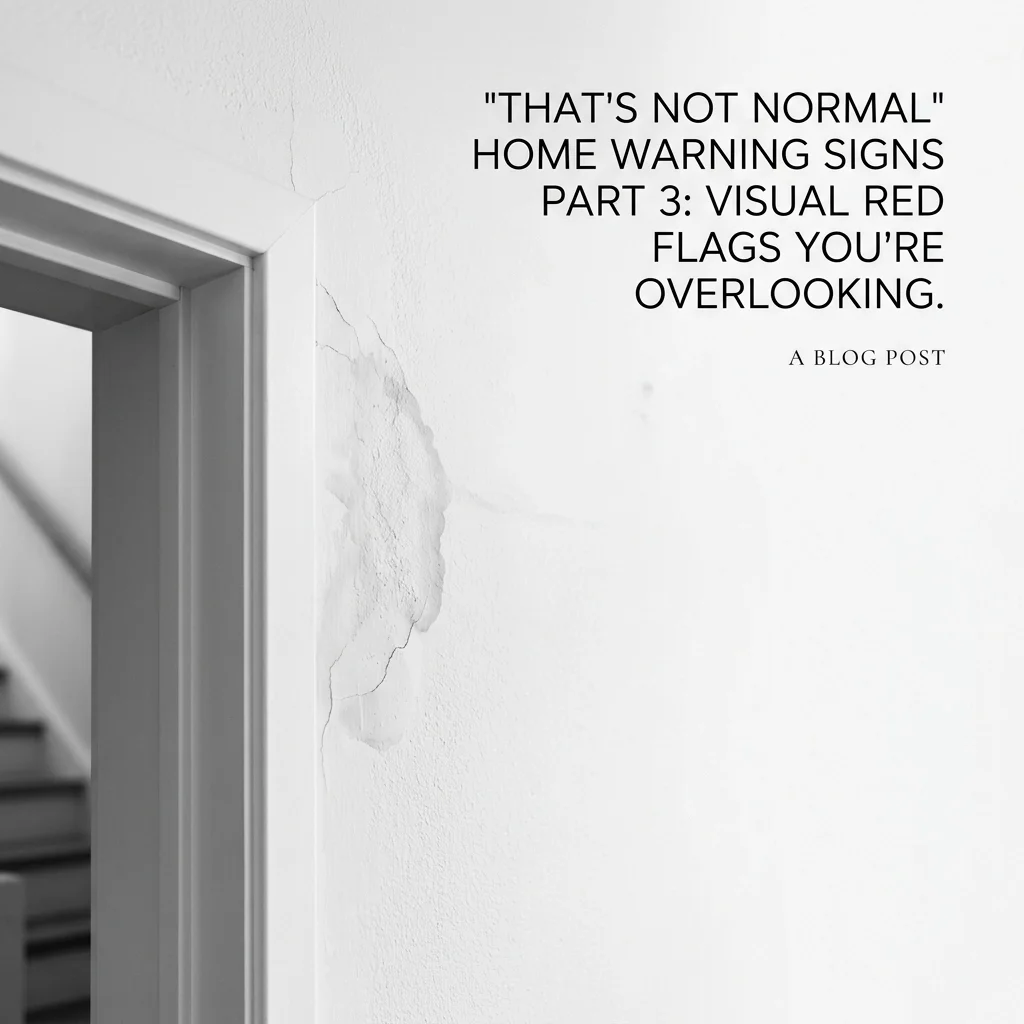
1. The "Spider-Man" Drywall Cracks
Drywall cracks are like gray hairs: a few are normal as things age and settle. But if you see cracks that are widening, longer than a few feet, or forming diagonally from doors and windows, it might indicate movement in the structure or foundation.
In the Salt Lake Valley, our soil loves to shift. If you notice your doors are sticking or you see these "stair-step" cracks, don't just patch them with spackle and hope for the best. That’s like putting a Band-Aid on a broken leg. Whether it’s a simple patch or a sign of something deeper, a handyman in Herriman can help you determine if it’s just settling or a structural "oopsie."
2. Peeling Paint Around Windows (The Rot Signal)
If the paint around your window sills is bubbling, peeling, or flaking, it’s not just an aesthetic bummer. It’s usually a sign that moisture has moved in and started a family. When wood gets wet and stays wet, it rots.
By the time the wood feels soft to the touch, you may be looking at partial repair or, in more advanced cases, full replacement. Catching it early means we can scrape, seal, and repaint to protect your home's exterior before the Salt Lake winters turn that small flake into a giant hole.
3. The "Ghost" Flickering Lights
Unless you’re living in a horror movie, your lights shouldn’t flicker when the wind blows or when the microwave kicks on. Flickering lights often mean loose wiring or an overloaded circuit.
Electrical issues are a leading cause of house fires, so this isn't the time for a DIY "I saw it on YouTube" fix. Whether you need a new GFCI outlet or a check-up on your panel, we handle the small stuff so you don't have a big disaster.
Do not attempt to diagnose or repair wiring yourself. If you notice flickering with other warning signs, have it inspected by a licensed professional.
4. Ceiling "Coffee Stains"
If you see a yellow or brown ring on your ceiling, your house isn't developing a taste for lattes. That’s a water stain. It could be a leaky pipe, a rogue upstairs bathtub, or a roof issue.
Water damage is like a quiet villain; it an lead to hidden damage, including mold growth or weakened drywall over time. If you spot a stain, call us immediately. We’ll find the source, fix the leak, and make that ceiling look brand new again.
No Job Too Big or Too Small
At Your Handyman Pros, we take pride in being the top choice for homeowners across the Salt Lake Valley. Whether you're in Magna, West Valley City, or Riverton, we’re here to tackle those "not normal" signs before they become "really expensive" problems.

“That’s Not Normal” Home Warning Signs Part 2: Smells That Signal Hidden Problems
“That’s Not Normal” Home Warning Signs Part 2: Smells That Signal Hidden Problems
If your house is making noise, it’s asking for help. If it’s starting to smell, it’s not being subtle about it.
Welcome back to our series on the weird, the wacky, and the “Wait… was that always there?” home warning signs. Last time, we covered the sounds. Today, we’re following our noses.
Your home shouldn’t really have a “signature scent” beyond everyday living. If something smells off, there’s usually a reason, and it’s rarely something you want to ignore. Across the Salt Lake Valley, we’ve seen and smelled just about everything. Here are the scents that often point to real problems hiding behind walls, under floors, or inside your systems.
1. The “Old Gym Bag” (Musty and Damp)
That heavy, earthy smell is usually a sign of moisture where it shouldn’t be.
If you notice it in a basement, crawl space, or behind cabinets, it often points to a slow leak, condensation issue, or potential mold growth. Even in Utah’s dry climate, small leaks can go unnoticed long enough to create this kind of buildup.
If you catch a musty smell, don’t just mask it. Check for damp materials, staining, or soft spots in nearby surfaces.
👉 If the source isn’t obvious, it’s worth having it inspected before it develops into a larger moisture or air quality issue.
2. The “Burning Plastic” Smell (Electrical Issues)
This is one you don’t ignore.
A smell similar to burning plastic, hot wiring, or a sharp chemical odor can indicate overheating electrical components or damaged wiring. These issues can develop behind outlets, switches, or inside walls.
Electrical failures are a known fire risk, so this should be treated as urgent.
👉 If you notice this smell, stop using the affected area. If it’s safe, turn off power at the breaker and contact a licensed professional immediately.
3. The “Sewer Surprise” (Rotten Eggs or Sewage)
If your home suddenly smells like sulfur or sewage, there’s a good chance something is off with your drainage system.
In many cases, it’s a dry P-trap. Every drain has a water seal that blocks sewer gases, and if a fixture hasn’t been used in a while, that water can evaporate. Running water for a minute often resolves it.
If the smell sticks around, the issue may be deeper, such as a venting problem or a damaged pipe.
👉 Persistent odors should be checked before they turn into more significant plumbing repairs.
4. The “Gas Leak” Smell (Strong Sulfur)
Natural gas is odorless, but utility companies add a strong sulfur-like scent so leaks are easy to detect.
If you smell gas, treat it as an emergency.
👉 Do not flip switches, use appliances, or try to locate the leak yourself. Get everyone outside and contact your gas provider immediately. Only return once the area has been cleared safe.
Why Smells Matter
In the Salt Lake Valley, temperature swings and dry conditions can cause materials to expand, contract, and eventually fail. Small leaks, worn seals, or aging systems often show up first as odors before visible damage appears.
These smells are early warning signs. Catching them early usually means simpler, less expensive fixes.
Don’t Ignore What Your Home Is Telling You
Your home has ways of letting you know when something isn’t right. Smells are one of the clearest signals.
At Your Handyman Pros, we help homeowners track down the source, fix the issue, and prevent it from turning into something bigger. Whether it’s a hidden leak, a ventilation issue, or something that just doesn’t smell right, getting ahead of it makes all the difference.
We serve the entire Salt Lake Valley, including Herriman, Riverton, Sandy, Magna, and Bountiful.
If something smells off, it’s worth checking out.
Stay tuned for Part 3, where we’ll cover the visual warning signs homeowners tend to overlook.

“That’s Not Normal” Home Warning Signs Part 1: Sounds Your House Shouldn’t Make
“That’s Not Normal” Home Warning Signs Part 1: Sounds Your House Shouldn’t Make
You’re sitting on the couch in your Herriman living room, the kids are finally asleep, and you’re about to dive into that show everyone’s talking about. Then you hear it. A thump. A whistle. A weird crackle coming from the wall behind the TV.
If your house is making noise, it’s already asking for help.
At Your Handyman Pros, we’ve seen and heard it all. While some homes have a little “character” and the occasional floorboard creak, there are specific sounds that should never be ignored. As B100 General Contractors, we know a weird noise today is often an expensive repair tomorrow.
Let’s break down the most common sounds your Salt Lake Valley home might be making and what they actually mean.
1. The Snap, Crackle, and Pop (Water Heater)
If it sounds like someone is making stovetop popcorn in your basement, your water heater is likely struggling. That popping or banging sound is usually caused by sediment, minerals like calcium and magnesium that settle at the bottom of the tank over time.
Here in the Salt Lake Valley, hard water makes this especially common. As sediment builds up, it creates a barrier between the heating element and the water. The noise you hear is steam pushing through that buildup.
This does more than make noise. It reduces efficiency, forces your system to work harder, and can lead to premature wear or leaks over time.
👉 A simple tank flush can often resolve this if caught early.
2. The Midnight Scratching (Pests in the Walls)
Houses don’t have fingernails, so if you hear scratching, scurrying, or something dragging across your ceiling, you’ve got uninvited guests.
Whether you’re in a newer home in Riverton or an older place in West Valley City, pests love warm insulation. Different sounds can point to different culprits:
Mice or rats: quick, light scurrying
Squirrels or raccoons: heavier thumping and louder scratching
Insects: faint clicking or rustling, often harder to notice until damage appears
Beyond the discomfort, pests can chew wiring, damage insulation, and create real safety issues if left unchecked.
3. The Ghostly Whistle (Air Leaks)
Hear a faint, high-pitched whistle when the wind moves through the valley? That’s not a ghost. That’s your conditioned air escaping.
Whistling around windows or doors usually means failing weatherstripping or slight structural shifting. Utah’s temperature swings cause materials to expand and contract, which creates gaps over time.
Air leaks are more than annoying. They are one of the biggest contributors to energy loss. In fact, they can account for roughly 20 to 30 percent of a home’s heating and cooling inefficiency.
👉 If you hear airflow, start with weatherstripping and sealing before the problem gets worse.
4. The Electric Beehive (Buzzing Outlets or Switches)
This is the one sound you should take seriously right away.
If you hear buzzing or crackling coming from an outlet or light switch, you may be hearing electrical arcing. That is when electricity jumps across a gap in damaged or loose wiring, generating significant heat.
Electrical arcing is a well-documented cause of residential fires.
If you notice buzzing along with flickering lights, warm outlets, or a faint burning smell, treat it as urgent.
👉 Do not attempt to fix this yourself. If it is safe, shut off power to the affected area and contact a licensed professional immediately.
5. The Clanking Pipes (Water Hammer)
If you turn off a faucet and hear a loud bang in the walls, that is known as water hammer.
It happens when water flow stops suddenly and pressure has nowhere to go, causing pipes to jolt and hit surrounding framing.
Over time, this repeated movement can loosen connections and lead to hidden leaks behind walls.
👉 If the noise is consistent, it is worth addressing before it turns into a larger repair issue.
Don’t Let the Noise Turn Into a Bigger Problem
Your home is a complex system. Just like your car, unusual sounds are usually early warning signs that something is wearing out or failing.
Ignoring them rarely makes them go away. It usually just makes the eventual repair more expensive.
At Your Handyman Pros, our team is here to help track down the source, fix the issue, and get your home back to being the quiet, comfortable space it should be. Whether it’s sealing air leaks, diagnosing a strange noise, or handling repairs safely, we bring professional experience to every job.
If your house is asking for help, it’s a good idea to listen.
We proudly serve the Salt Lake Valley, including Herriman, Riverton, Sandy, Magna, and West Valley City.
Stay tuned for Part 2, where we’ll break down the smells that signal hidden problems in your home.
The Most Ignored Home Maintenance Tasks Part 3: The “Out of Sight” Problems That Add Up
The Most Ignored Home Maintenance Tasks Part 3: The “Out of Sight” Problems That Add Up
We’ve all heard the phrase “out of sight, out of mind.” When it comes to your home in the Salt Lake Valley, that mindset can eventually lead to a pretty hefty repair bill. In Part 1 and 2 of this series, we talked about the visible stuff such as the leaky faucets and the peeling caulk. But today, we’re diving into the dark corners of the attic and the high reaches of the roofline.
These are the tasks that don’t usually scream for attention until something goes wrong. But as your local Salt Lake handyman, I can tell you that an hour of prevention today saves a weekend of headaches tomorrow.
1. Gutters and Downspouts: The Foundation’s Best Friend
It’s easy to ignore your gutters until you see a literal waterfall pouring over your front porch during a spring rainstorm. But gutters aren’t just for keeping you dry when you walk inside; they are designed to move large volumes of water away from your foundation.
In places like Herriman and Riverton, where we deal with heavy snowmelt, clogged gutters can lead to ice dams in the winter and increase the risk of moisture problems around the foundation. Cleaning out the leaves is only half the battle. You also need to check the downspout flow. If the water isn't exiting at the bottom, it's backing up into your fascia and soffit, leading to rot.
If you’re worried about how your exterior is holding up against the elements, check out our guide on protecting your home exterior in Utah.
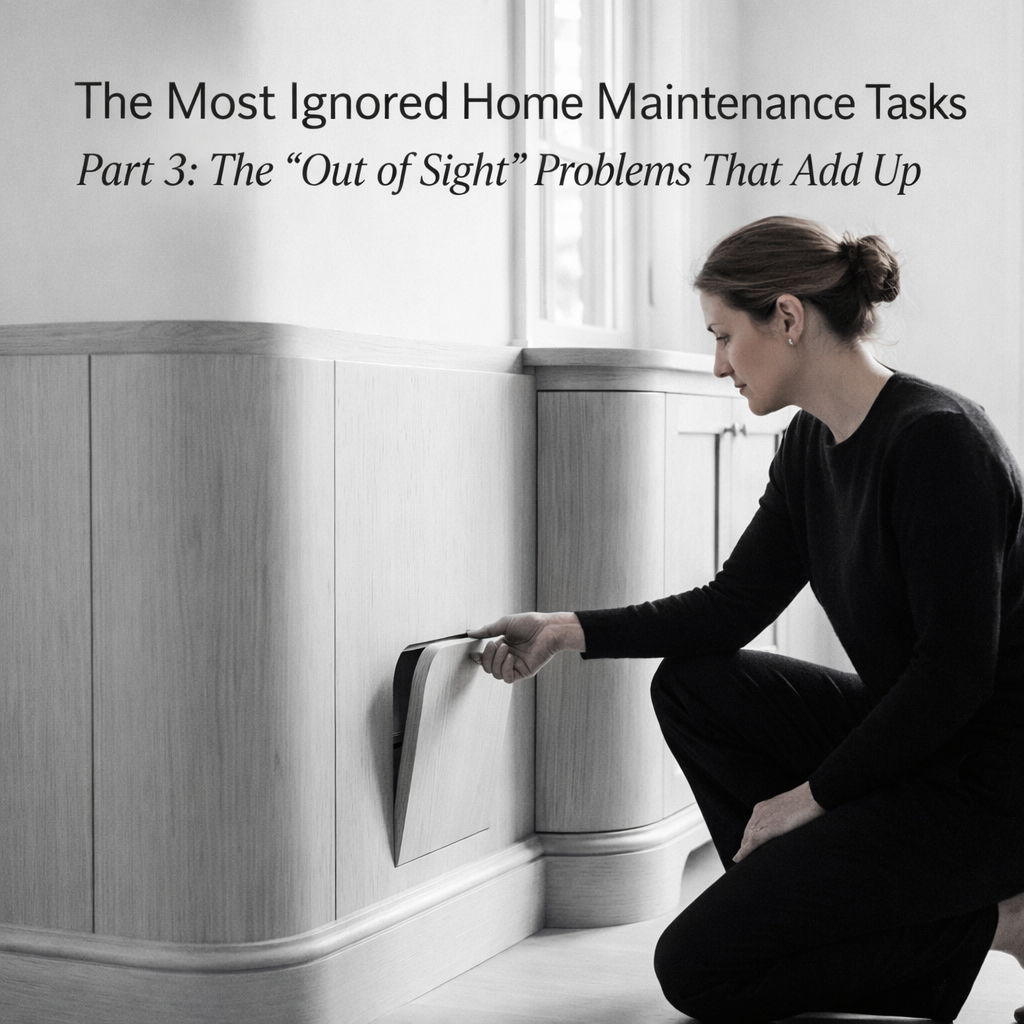
2. The Attic: Insulation and Ventilation
When was the last time you actually crawled into your attic? If you’re like most homeowners in Sandy or Magna, the answer is probably "never." However, your attic is the lungs of your home.
If your insulation has settled or been moved by critters, you’re throwing money out the roof. Even more important is ventilation. Without proper airflow, heat and moisture get trapped. In the summer, this can shorten the lifespan of your shingles over time. In the winter, it can create conditions where mold is more likely to develop.
Poor attic health is a common contributor to HVAC inefficiency in Utah homes. A quick inspection can tell you if you need a top-off on your blown-in insulation or if your soffit vents are blocked.
3. Safety First: GFCI Outlets and Smoke Detectors
This one isn't about saving money: it’s about saving lives. We all know to change the batteries in our smoke detectors (usually when they start chirping at 3 AM), but when was the last time you tested them? Dust can settle on the sensors, making them less effective over time.
Similarly, those GFCI outlets in your kitchen and bathroom (the ones with the "test" and "reset" buttons) are designed to trip when they detect an imbalance in electrical current, which can happen if electricity is flowing where it shouldn’t, like through water or a person. If you press that "test" button and it doesn't click, that outlet may no longer be protecting you from a nasty shock.
If you're noticing weird electrical quirks, it might be time to call a handyman Herriman residents trust to swap those old outlets out. You can read more about these hidden home problems to see what else might be lurking.
Let the Pros Handle the Dirty Work
We know that crawling into a dusty attic or climbing a ladder to scoop muck out of a gutter isn't exactly a fun Saturday. That’s why Your Handyman Pros is here. Whether you’re in West Valley City, Bountiful, or anywhere else in the Utah Valley, we can handle the "out of sight" tasks so you can get back to your weekend.
Ready to check these off your list? Give us a shout today!
The Most Ignored Home Maintenance Tasks Part 2: The Stuff That Hurts Efficiency (and Your Wallet)
The Most Ignored Home Maintenance Tasks Part 2: The Stuff That Hurts Efficiency (and Your Wallet)
Hey there, neighbors! If you caught Part 1 of this series, you know we’re diving deep into those easy-to-ignore chores that quietly wreck your house. Today, we’re moving from "structural damage" to "financial leakage."
We’ve all had that moment where we open the utility bill and wonder if we accidentally started running a data center in the basement. Especially here in the Salt Lake Valley, where our summers are scorching and our winters involve more shoveling than any human should have to do, energy efficiency isn't just a buzzword, it’s how you keep your hard-earned money in your pocket.
If you’re looking for a Salt Lake handyman who cares about your bottom line, you’re in the right place. Let’s talk about three common efficiency-killers hiding in plain sight.
1. Sealing the Invisible Holes (Windows and Doors)
In places like Herriman and Riverton, the wind can really kick up. If you have tiny gaps around your windows or doors, your expensive A/C or furnace isn't just heating your home, it’s trying to climate-control the entire neighborhood.
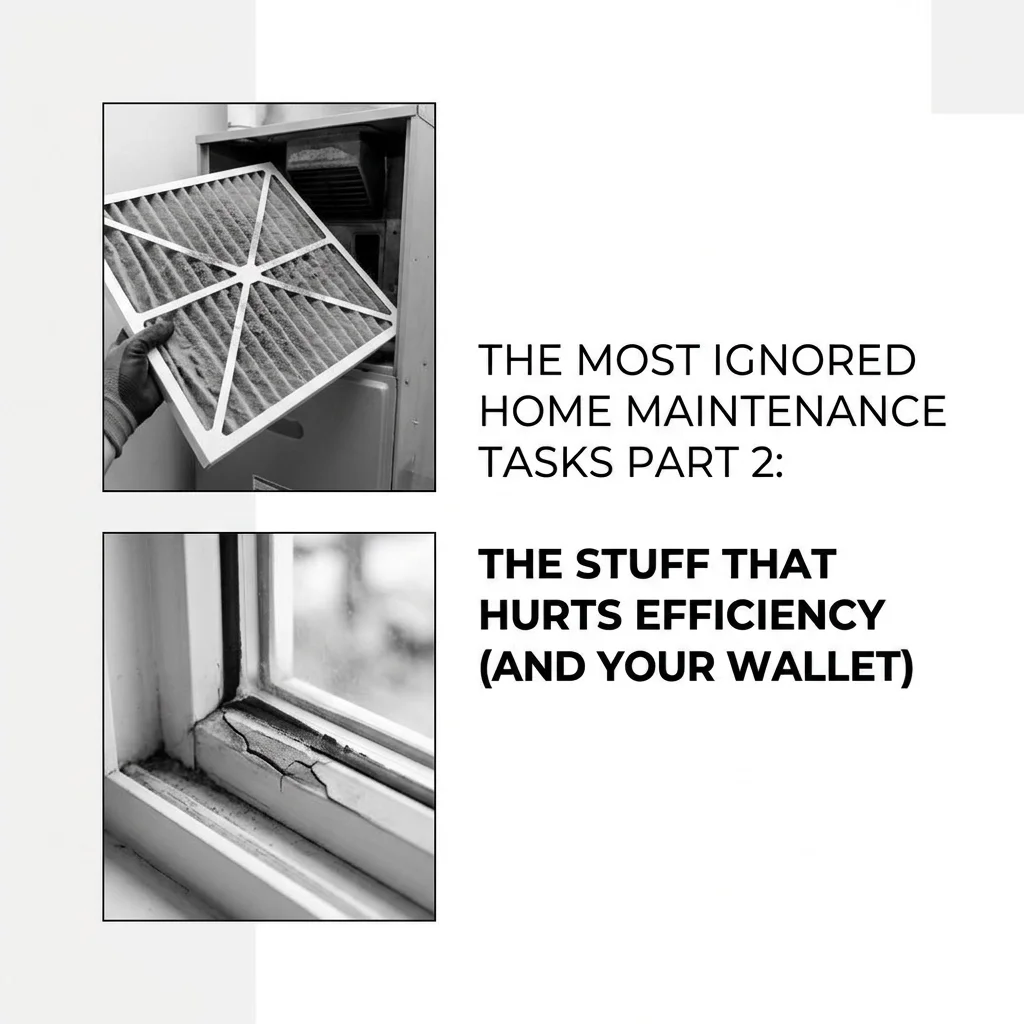
Most homeowners ignore a small draft, thinking, "Oh, it's just an old house." But those tiny gaps are essentially like leaving a window cracked open 24/7. This is a common source of air loss in Utah homes.
How to spot the problem:
The Light Test: On a sunny day, look at your exterior doors. Can you see light peeking through the edges? If light gets in, air gets out.
The Draft Test: Hold a tissue or use a simple draft detection method near window frames on a breezy day. If it moves noticeably, you’ve likely got a leak.
The Fix:
Adding fresh weatherstripping or a new door sweep is a quick afternoon project. If the caulking around your window trim is cracked or peeling, it’s time to scrape it off and lay down a fresh bead. It sounds small, but sealing these gaps can help reduce heating and cooling costs. If you aren't comfortable on a ladder or don't want to mess with sticky weatherstripping, give us a call. These are exactly the kinds of small fixes that make a big difference.
2. HVAC Filters and the "Hidden" Dust in Your Vents
We talk about this a lot because it’s one of the most common causes of HVAC strain and early wear. Your HVAC system is the lungs of your home. If the filter is clogged with dust, pet hair, and Utah desert sand, the system has to work harder to pull air through.
When your system works harder, it uses more energy and can wear out faster than it should. We see this all the time when doing home repairs in Bountiful. A simple filter change can help you avoid much more expensive repairs down the road.
Don't forget the vents!
It’s not just the filter. Cleaning out your floor and ceiling vents is important too. Over time, dust builds up on the louvers, restricting airflow. If you’ve noticed one room is always colder than the rest, it might not be the insulation. It could be a dirty vent or a blocked return. Check out our guide on HVAC efficiency killers in Utah for more details.
3. The Silent Energy Hog: Your Water Heater
Most people never look at their water heater until they’re taking a surprise cold shower. But here in the Salt Lake Valley, we have hard water, meaning it contains minerals like calcium and magnesium.
Over time, these minerals settle at the bottom of your tank, creating a layer of sediment. That sediment acts like an insulator between the burner and the water, which can reduce efficiency and make the unit work harder to heat your water.
The Fix: The Annual Flush
Flushing your water heater once a year helps remove that sediment. It can improve performance and extend the life of the unit. If you’ve been hearing a "popping" or "rumbling" sound coming from your utility closet, that’s often a sign sediment has built up and it’s time for maintenance.
If the idea of handling your water heater’s drain valve makes you nervous, no problem. This is one of those maintenance items that’s quick for a pro and easy to put off as a homeowner.
Why Efficiency Matters Now
With utility costs still putting pressure on homeowners, every little bit helps. We’re seeing more people focus on energy-efficient habits and smart maintenance because the savings add up over time.
At Your Handyman Pros, we don't just fix things when they break. We help you maintain your home so they don't break in the first place. Whether it's sealing up drafts, improving airflow, or keeping your systems running efficiently, we’re here to help.
Ready to lower those bills?
Don't let your money leak out through the windows or get wasted by inefficient systems. If you’re looking for a reliable handyman in West Valley City or anywhere in the Salt Lake Valley, reach out to Your Handyman Pros. We’d love to help you get your home running like a well-maintained machine.
Stay tuned for Part 3, where we’ll talk about the “out of sight” problems like gutters and attics that can cause some of the biggest headaches of all!
The Most Ignored Home Maintenance Tasks Part 1: The Things That Quietly Cause Damage
The Most Ignored Home Maintenance Tasks Part 1: The Things That Quietly Cause Damage
Hey there, Salt Lake Valley neighbors!
As a licensed B100 General Contractor, we know a lot about crawlspaces, attics, and bathrooms from Herriman to West Valley City. We know that most homes don’t fall apart overnight. They fall apart in slow motion because of the small stuff we all tend to ignore.
We’re starting a new series on the blog to help you stay ahead of the game. Today, in Part 1, we are talking about the "Silent Saboteurs": those tiny issues that quietly cause major damage while you’re busy living your life.
1. Re-Caulking: Your Home’s First Line of Defense
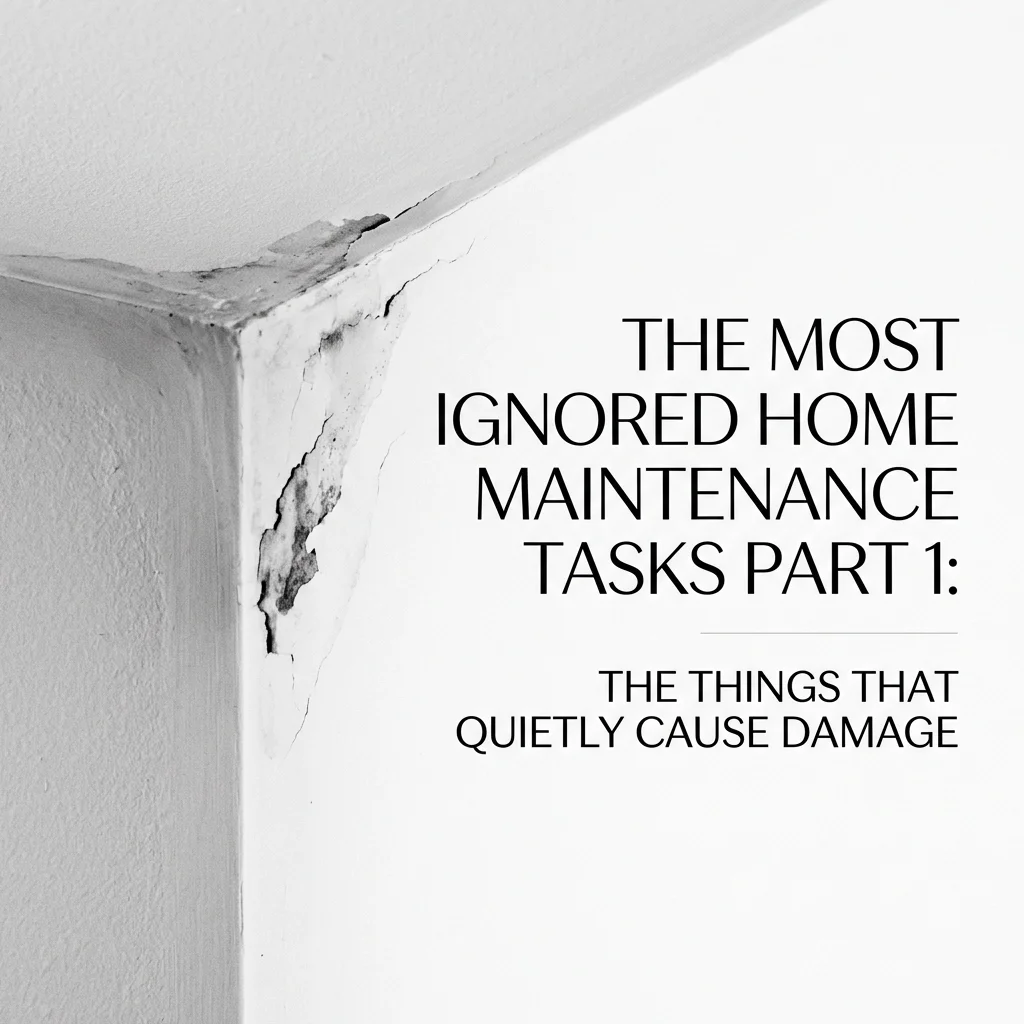
It’s just a little bit of rubbery stuff around the tub, right? Wrong. That caulk is the only thing standing between your shower water and your subfloor. Over time, caulk dries out, shrinks, and cracks. Once that happens, water seeps into the walls every time you take a shower.
If you’re seeing black spots in the corners of your shower or peeling paint on the baseboards in Sandy or Magna, you likely have a failing seal. A $10 tube of high-quality silicone caulk can prevent repairs that can easily climb into the thousands if water damage spreads. If you aren't sure how to get a clean bead, check out our fast weekend bathroom fixes.
2. Exhaust Fans: The Overlooked Fire and Mold Risk
When was the last time you cleaned your bathroom or kitchen exhaust fan? If you’re like most homeowners, the answer is "never."
These fans pull moisture and grease out of the air. Over time, dust caked with humidity turns into a heavy sludge that bogs down the motor. “This makes the motor work harder and run hotter, which shortens its lifespan and, in extreme cases, can become a safety concern. When that steam stays in the room, it settles on your ceiling and behind your mirror, creating conditions where mold can develop, especially in poorly ventilated bathrooms. Take five minutes to vacuum out the cover and the fan blades. Your lungs (and your wallet) will thank you.
3. The "Invisible" Drips Under Sinks and Toilets
We call these the stealth leaks. You might not see a puddle on the floor, but that doesn't mean it’s dry. A slow drip from a supply line under your kitchen sink or a failing wax ring behind a toilet can go unnoticed until you start to notice soft flooring, slight movement, or a musty smell.
In many cases, the water is absorbed by the cabinetry or the subfloor. By the time you smell something "musty," the wood is already rotting. As your go-to Salt Lake handyman, I recommend doing a "paper towel test" once a month. Wipe a dry paper towel around the connections under every sink. If it comes back damp, you’ve got a problem.
These hidden home problems are exactly why we take maintenance so seriously here at Your Handyman Pros. Whether you are in Bountiful or Herriman, keeping an eye on these three things will save you a fortune in the long run.
Don’t have time to crawl under the sink or climb a ladder to clean fans? That’s what we’re here for! Your Handyman Pros is a licensed and insured contractor. We handle everything from the "oops" moments to full-scale renovations.
Stay tuned for Part 2, where we’ll talk about the tasks that are quietly draining your bank account through high utility bills!

Quick Fixes That Prevent Expensive Repairs Later
Quick Fixes That Prevent Expensive Repairs Later
We’ve all been there. You’re walking through your house in Sandy or Bountiful, and you notice a tiny crack in the caulk or a door that needs a little extra "oomph" to close. It’s easy to tell yourself, "I’ll get to that next weekend."
Over the years, we've learned that your home is a master at turning "small annoyances" into "major bank account drainers" if you give it enough time. As a local Salt Lake handyman crew, we know a $50 maintenance task that gets ignored can become a $5,000 restoration project.
If you want to keep your home in tip-top shape without the heavy price tag, here are three quick fixes that are worth their weight in gold.
1. Recaulk Your Bathrooms and Kitchens
That thin, rubbery line around your bathtub, shower, and sink isn’t just for looks. It’s actually your home’s first line of defense against water intrusion.
Over time, caulk dries out, shrinks, and peels. Once there’s even a hairline gap, water can start slipping into places where you really don't want it to go. Water from your morning shower or a splashy dish session slips behind the tiles and starts soaking into the drywall and subflooring. By the time you see a soft spot in the floor or a weird stain on the ceiling below, you might be looking at a potential rot and mold problem.
Recaulking is a high-ROI task that any homeowner in the Salt Lake Valley can tackle (or have us do in an hour). If you’re seeing discoloration or peeling, it’s already time to scrape it out and start fresh. For more ideas on keeping your wet rooms in check, check out these fast weekend bathroom fixes.
2. Seal Exterior Gaps and Cracks
Utah weather is famous for its mood swings. One day it’s 70 degrees in Magna, and the next day it’s freezing. These temperature fluctuations cause your home to expand and contract constantly.
When gaps open up around your windows, doors, or siding, they become an open invitation for:
Water Intrusion: Leading to structural rot.
Pests: Spiders and mice are looking for any tiny opening to make your home theirs.
Energy Loss: Your expensive heated or cooled air is literally flying out the window.
A quick pass with a high-quality, exterior-grade sealant can save you a fortune on utility bills and protect your home's exterior from the elements. Whether you're in Herriman or Riverton, keeping that envelope tight is key to avoiding home repair Salt Lake nightmares down the road.
3. Fix Those Loose or Misaligned Doors
Does your front door stick every time it rains? Or maybe your bedroom door drags across the carpet? While it might seem like a minor quirk of "old house charm," a misaligned door is often a warning sign.
Usually, it’s just a loose hinge screw or a strike plate that’s moved a fraction of an inch. However, if you keep forcing that door shut, you’re putting stress on the frame and potentially damaging your flooring. In some cases, it can even point to moisture-related swelling that needs to be addressed before it warps the door permanently.
If the door suddenly starts sticking or shifting significantly, it’s worth having it checked to rule out moisture or structural movement.
We’re Here to Help!
At Your Handyman Pros, we take pride in being the team you can trust for the small stuff before it becomes the big stuff. Whether you need a quick hand in West Valley City or a full maintenance sweep in the Salt Lake Valley, we’ve got your back. We are licensed and insured, and we love helping our neighbors stay ahead of the curve.

Why Your Doors Suddenly Won’t Close Properly: Part 2 - The Bigger Problems You’re Missing
Why Your Doors Suddenly Won’t Close Properly: Part 2 - The Bigger Problems You’re Missing
Hey there, Salt Lake Valley neighbors! In our last post, we talked about the "usual suspects", those annoying but relatively easy-to-fix reasons why your doors start sticking. We covered things like Utah’s crazy seasonal shifts and those loose hinges that just need a little TLC. But what happens when you tighten the screws, plane the wood, and that door still won’t latch?
That’s when we start looking at the "Bigger Problems." Today, we’re diving into the bigger problems that often hide behind a sticking door. Don’t worry, knowing what to look for is half the battle. If you’re in Sandy, Herriman, or anywhere across the valley and your doors are acting possessed, this one is for you.
1. Moisture Damage Around the Frame: The Silent Sweller
In the Salt Lake Valley, we’re used to dry air, but that actually makes our homes more sensitive to moisture when it does show up. If you have a door that is suddenly sticking and it’s not just a humid day, you might have a hidden leak.
Moisture damage doesn’t always look like a puddle on the floor. It often starts inside the wall. Leaks from a window above the door, a faulty roof flashing, or even a slow-leaking pipe in the wall can cause the wooden studs and the door frame itself to absorb water. When wood gets wet, it expands, and it doesn’t always go back to its original shape.
If the header (the horizontal beam above your door) starts to sag because of rot or moisture-induced swelling, it’s going to pin that door right into the floor or the side of the jamb.
Check for these red flags:
Discoloration or staining on the drywall around the door frame.
A musty smell near the entryway.
Peeling paint or "bubbling" on the trim.
If you suspect water is the culprit, you need a home repair Salt Lake expert to find the source Today, we’re diving into the bigger problems that often hide behind a sticking door. You can check out some of our water waste and leak tips to see how small drips lead to big headaches.
2. Flooring Changes That Affect Door Clearance
Did you recently upgrade to that beautiful luxury vinyl plank (LVP) or get new, plush carpeting in your West Valley City home? While a new floor looks great, it often changes the height of your walking surface.
Even a quarter-inch difference can be enough to make a door drag. This is especially common when homeowners layer new flooring over old flooring without considering the door swing. However, it's not always the "new" stuff that causes problems. Sometimes, it’s what’s underneath.
If your subfloor is beginning to delaminate or rot, perhaps due to a bathroom leak next door, the floor can actually "heave" or rise slightly. This pushes the floor up into the path of the door. If you’ve noticed your door is suddenly scraping the floor but the hinges are tight, it’s time to look down.
We often see this in older homes in Magna or Riverton where previous renovations didn’t account for proper transitions. If you're dealing with hidden home problems in Herriman, flooring height is a top contender.
3. When It’s a Warning Sign of Structural Movement
Now, let’s talk about the one that makes everyone nervous: structural movement. Every house "settles," especially in the Salt Lake Valley where our soil can be a mix of sandy deposits and heavy clay. But there’s a difference between normal settling and structural failure.
Think of your door frames as the "canary in the coal mine." Because door frames are perfectly rectangular (or they should be), they are the first things to show signs when a house starts to tilt or shift.
If you notice:
A door that was fine last month now has a massive gap at the top left but is pinching at the bottom right.
Diagonal cracks appearing in the drywall starting at the corners of the door frame.
Multiple doors in the same area of the house all failing at once.
This can sometimes be an early sign of foundation movement or framing shift. While a Salt Lake handyman can help diagnose these issues, large-scale structural repairs often move into the territory of our sister brand, Your Contractor Pros.
Why You Shouldn’t Just "Force It"
Many homeowners in Sandy and Riverton try to solve a sticking door by just pulling harder or kicking it shut. Please, don’t do that!
Forcing a door that won’t close properly puts immense pressure on the hinges and the frame. You could end up ripping the screws right out of the wood, or worse, cracking the door itself. If the issue is structural or moisture-related, you’re just masking a symptom while the actual disease gets worse.
If you’ve got a door that’s giving you grief, it’s worth having a professional take a look. Usually, we can find a solution that saves the door and protects your home’s value.
How Your Handyman Pros Can Help
At Your Handyman Pros, we specialize in the "detective work" of home repair. We don’t just shave down the door and call it a day. We look at the hinges, the frame, the moisture levels, and the flooring to make sure we’re fixing the root of the problem.
Whether it’s a simple adjustment or a more complex bathroom refresh that involves fixing wall damage, we’ve got the tools and the expertise to handle it.
We are proud to be a licensed and insured contractor, serving the entire Salt Lake Valley. From the smallest sticking door to larger maintenance projects, we treat every home like it’s our own.
Don't let a "small" door problem turn into a major structural nightmare. Give us a call, and let’s get those doors swinging smoothly again!

Why Your Doors Suddenly Won’t Close Properly: Part 1 - The Common Causes
Why Your Doors Suddenly Won’t Close Properly: Part 1 - The Common Causes
We’ve all been there. You’re heading out the door in a hurry, you go to pull it shut behind you, and instead of that satisfying click, you get a jarring thud. Or maybe you’ve noticed that your bedroom door, which used to swing shut with a gentle push, now requires a shoulder-check and a bit of a lift to get it to stay latched. It might be good training if you're an aspiring lineman, but for most of us, it's an unnecessary annoyance.
It’s one of those little things that starts off as a minor "I'll get to it later" task and quickly turns into a daily frustration. If you’re living in the Salt Lake Valley, you’re definitely not alone. Doors are finicky things, and they react to everything from the foundation beneath your feet to the very air you breathe.
At Your Handyman Pros, we know that whether you’re in a brand-new build in Herriman or a charming mid-century home in Sandy, door alignment issues are universal. But before you go out and buy a plane to start shaving down your door, it’s important to understand why this is happening. If your door suddenly won’t close properly, starts sticking, or no longer latches, the cause is often simpler than homeowners expect.
In Part 1 of this series, we’re going to dive into the most common, non-serious causes of door trouble. These issues usually do not mean your house is falling down, but they do mean it’s time for quality home repair in the Salt Lake Valley.
1. Seasonal Expansion and Contraction: Why Doors Stick in Utah Weather
If you’ve lived in Utah for more than a few months, you know the weather here is... well, it’s a bit of a roller coaster. We go from bone-dry winters where the static electricity could power a small city to spring and summer months where the humidity (or at least the moisture in the air) shifts significantly.
Wood naturally expands and contracts as moisture levels change. It’s porous, meaning it acts like a giant, hard sponge. When the humidity levels rise in the Salt Lake Valley, the wood fibers in your doors and door frames soak up that moisture and swell. Conversely, when our notoriously dry winter air sets in, that moisture evaporates, and the wood shrinks.
The Sticking Cycle
This leads to what we call the "Sticking Cycle." A door that fits perfectly into its frame in January might start rubbing against the top or the side of the jamb in July. You might notice:
The "Summer Stick": The door is hard to push open or shut because it’s physically too large for the opening.
The "Winter Gap": The door closes easily, but you might notice a larger-than-normal gap, or perhaps the latch doesn't quite reach the strike plate anymore because the door has shrunk.
If you’re noticing this mostly on exterior doors or bathroom doors, moisture is the likely culprit. For those who want to dive deeper into how moisture affects the home, check out our guide on hidden home problems.
2. Loose Hinges: The Most Common Easy Fix
Sometimes the problem isn't the door itself, but the hardware holding it up. Think about how many times a day a door is opened and closed. Now think about the weight of a solid wood door. All that weight is supported by just a few screws driven into the wooden frame.
Over time, gravity wins. This is a very common reason people call a Salt Lake handyman.
The Hinge Pull
As the door is used, the screws in the top hinge often begin to pull away from the frame. Even a fraction of an inch of movement at the hinge translates to a significant sag at the opposite end of the door. If the top of your door is hitting the side of the frame (the latch side) near the top, or if the bottom of the door is dragging on the floor, you’re likely dealing with a sagging door.
How to check:
Open the door halfway and give it a gentle tug upward by the handle.
Watch the top hinge. Do you see the metal plate move away from the wood?
Look at the screws. Are they sitting flush, or are they backed out even a tiny bit?
Sometimes, simply tightening those screws with a screwdriver is enough. However, if the screw holes are "stripped" (meaning the wood inside has crumbled and the screw just spins), you'll need a pro to come in and properly reset those hinges. Like us. We are that pro.
3. House Settling: When the Frame Shifts
No house sits perfectly still. Whether you’re in a established neighborhood in West Valley City or a newer development in Riverton, your home is resting on soil that moves.
"Settling" sounds scary, but in most cases, it's a completely natural process. As the ground shifts or the weight of the house compresses the soil, the wooden "skeleton" of your home moves with it. The problem is that door frames are meant to be perfectly rectangular (or "square"). If one corner of the house sinks just half an inch more than the other, that rectangular door frame becomes a parallelogram.
Why Settling Affects Doors
Since the door itself remains a perfect rectangle, it won't fit into a slanted frame. You’ll start to see:
Uneven gaps along the top of the door (wider on one side than the other).
The door rubbing against the corner of the frame.
The latch bolt and the strike plate (the hole in the frame) no longer lining up.
If you live in areas with expansive clay soil, which is common in parts of the Salt Lake Valley, you may notice these shifts more frequently during seasonal changes as the soil gets wet and then dries out.
While minor settling is normal, if you start seeing cracks in the drywall above the corners of your doors, it might be time to have someone look at it. We’ve covered more about structural awareness in our home repair rumors series.
When to Call Your Salt Lake Handyman
While some of these issues can be fixed with a quick turn of a screwdriver, others require a bit more finesse. Shaving a door down because it's "sticking" might seem like a good idea, but if the issue is actually a loose hinge, you’ll end up with a permanently ruined door once the hinge is eventually fixed.
At Your Handyman Pros, we specialize in diagnosing these "annoyance" repairs before they become "replacement" repairs. We serve the entire Salt Lake Valley, including Magna, Sandy, and West Valley City, helping homeowners keep their houses in tip-top shape.
If your doors are sticking, sagging, or refusing to latch, don’t wait until the frame or hardware suffers permanent damage. A quick repair now can save you from a full door replacement later. Whether it’s a quick hinge adjustment or a more complex frame alignment, we’ve got you covered.
Stay tuned for Part 2, where we’ll talk about the bigger, more serious reasons your doors might be failing, including moisture damage and structural warnings you shouldn't ignore!

Fast Weekend Fixes That Pay Off: Part 3 - Curb Appeal Boosters
Fast Weekend Fixes That Pay Off: Part 3 - Curb Appeal Boosters
Welcome back to the final installment of our "Fast Weekend Fixes" series! We’ve already tackled the bathroom basics and kitchen upgrades, but today we are heading outside.
Curb appeal isn’t just for people trying to sell their homes in Riverton or Sandy. It’s for you! There is nothing quite like pulling into your driveway after a long day in the Salt Lake Valley and seeing a house that looks sharp, cared for, and welcoming.
Here are three weekend projects that will make your neighbors do a double-take.
1. Refresh Your Front Door
Think of your front door as the "handshake" of your home. If the paint is peeling or the handle is jiggling, it’s giving off the wrong vibe.
A fresh coat of paint is one of the cheapest and fastest ways to transform your exterior. Whether you go with a classic black, a bold navy, or a trendy sage green, a high-quality exterior paint will protect the wood from our intense Utah UV rays. While you’re at it, swap out that old, tarnished lockset for something modern. A heavy, matte black or brushed nickel handle makes the whole entryway feel more secure and high-end.
2. Seal Those Driveway and Walkway Cracks
Our Utah winters are brutal on concrete. Between the freezing and thawing, small cracks can quickly turn into major eyesores (and tripping hazards).
Spending a Saturday morning cleaning out weeds and filling cracks in your driveway or front walkway does wonders for your curb appeal. It makes the "lines" of your property look clean and well-maintained. If you ignore these small gaps, water gets in, freezes, and eventually leads to expensive replacement costs. For more tips on why this matters, check out our guide on exterior damage prevention in Salt Lake.
If a crack has created vertical separation or uneven slab height, filling alone may not be enough and the area should be professionally evaluated to prevent trip hazards.
3. The "Jewelry" of Your Home: Numbers, Lights, and Mailboxes
Sometimes the biggest impact comes from the smallest details. If your house numbers are those plastic stick-on versions from twenty years ago, it’s time for an upgrade. Modern, floating metal numbers or a nice plaque can instantly modernize a West Valley City bungalow or a Herriman estate.
Next, look at your exterior lighting. If your porch lights are full of cobwebs or looking dated, replace them with new exterior sconces or flush mount fixtures. Finally, if you have a roadside mailbox, make sure the post is straight and the box isn't rusted. These small repairs protect home value more than most homeowners realize!
When the Weekend Isn't Enough
We love a good DIY project, but we also know that life in the Salt Lake Valley gets busy. That’s where we come in. At Your Handyman Pros, we can handle the small stuff so you can enjoy your weekend.
We are a licensed and insured contractor, and we take pride in helping our neighbors in Magna, Riverton, and throughout the valley keep their homes in tip-top shape.
Ready to boost that curb appeal without breaking a sweat? Give us a call!

Fast Weekend Fixes That Pay Off: Part 2 - Kitchen & Living Space Glow-Up
Fast Weekend Fixes That Pay Off: Part 2 - Kitchen & Living Space Glow-Up
Last week, we talked about how a few quick updates in the bathroom can make your home feel like a spa. But let’s be real, most of our time isn't spent in the shower. It’s spent in the kitchen and the living room. Whether you’re in West Valley City or out in Magna, these are the high-traffic areas that take the most abuse.
If your kitchen is starting to feel a little tired, or your living room walls look like they’ve gone a few rounds with a moving truck, don’t worry. You don’t need a $50k renovation to get that "new home" feeling. Here are three weekend fixes that pay off immediately.
1. The "Jewelry" of the Kitchen: Cabinet Hardware
If your kitchen looks functional but a little dated, the fastest way to modernize it is by swapping out the hardware.
Think of cabinet handles and knobs as the jewelry of your kitchen. Replacing those old, brass-pitted handles or worn-out wooden knobs with sleek matte black, brushed gold, or classic nickel can change the entire vibe of the room. It’s a project you can finish in an afternoon with just a screwdriver.
Pro Tip: If you're switching from a single knob to a handle that requires two holes, you’ll need to do some drilling and filling. If that sounds like a headache, give us a call. At Your Handyman Pros, we handle the precise measurements so your cabinets don't end up looking like Swiss cheese.
2. Erase the "Life Happens" Marks
We’ve all seen the scuffs on the baseboards from the vacuum, the nail holes from that gallery wall you moved three times, and the mysterious dings near the entryway. These small flaws are the stuff homeowners ignore until it’s embarrassing.
Spend a Saturday morning with a tub of lightweight spackle, a putty knife, and some matching touch-up paint. Walking into a room where the walls are crisp and the trim is clean makes the whole house feel more expensive. If your trim is beyond a simple touch-up and needs a full refresh, we can help with that too.
3. Lighting and Power: Dimmers and Plates
Nothing kills the mood in a living room like harsh, flickering overhead lights. One of the best upgrades you can "feel" immediately is installing dimmer switches. Being able to drop the lights for a movie night or a cozy dinner in the Salt Lake Valley is a game-changer.
While you're at it, look at your switch plates and outlets. If they’re yellowed, cracked, or splattered with paint from three owners ago, replace them! It’s a small detail, but fresh, clean white or modern screwless plates make a massive difference in how "finished" a room looks.
Safety First: Dealing with electricity can be intimidating. Always turn off power at the breaker and verify the circuit is dead with a voltage tester before removing any switch plate, outlet, or dimmer. If you aren't comfortable swapping out outlets or installing dimmers, don't risk it. We are a licensed and insured contractor, and we’re happy to swing by and get it done safely and quickly.
When to DIY vs. When to Call the Pros
These weekend fixes are great for a Saturday project, but sometimes a "small" fix reveals a bigger issue, like finding out those scuffed baseboards are actually hiding water damage.
For the small stuff that keeps your home running smoothly, Your Handyman Pros is here for you. Whether you're in West Valley City, Magna, or anywhere else in the Salt Lake Valley, we’ve got your back. We’re licensed and fully insured, so you can rest easy knowing the job is done right.
Ready to cross those "annoyances" off your list? Reach out today!

Fast Weekend Fixes That Pay Off: Part 1 - Bathroom Refresh
Fast Weekend Fixes That Pay Off: Part 1 - Bathroom Refresh
We spend a lot of time in our bathrooms, but they’re often the first rooms to show their age. Between the hard water we deal with here in the Salt Lake Valley and the daily wear and tear of a busy family, things can start looking a little "crunchy" faster than we’d like.
The good news? You don’t need a five-figure renovation budget to make a massive impact. At Your Handyman Pros, we know some homeowners in Sandy, Herriman, and Riverton feel stuck with a dated space because they aren't ready for a full gut-job.
If you’ve got a free Saturday, here are three high-impact bathroom fixes that will instantly improve your home’s vibe and value.
1. Refresh Worn Caulk and Grout Lines
Nothing screams "neglect" louder than moldy, peeling caulk or stained grout. Over time, caulk shrinks and pulls away from the tub or shower base, which isn't just an eyesore: it’s an invitation for water damage.
If you’re seeing dark spots, mildew staining, or visible gaps, it’s time to scrape it out and start fresh. A clean, bright white line of silicone caulk can make an old tub look brand new. While you’re at it, take a look at your grout. If it’s dingy, a grout pen or a deep professional cleaning can work wonders.
Be careful with those "viral" cleaning hacks you see online, though. Some of them can actually eat away at your seals and cause more harm than good. You can read more about that in our post on viral bathroom hacks that cause damage.
2. Swap Outdated Fixtures and Showerheads
If your faucet looks like it belongs in a 1990s time capsule, it’s time for an upgrade. Swapping out a crusty chrome faucet for a modern matte black or brushed nickel fixture is like putting jewelry on your bathroom.
In Sandy and Riverton, where mineral buildup is a constant battle, a new high-efficiency showerhead doesn't just look better: it performs better. A modern WaterSense-labeled showerhead can help reduce water use while still maintaining strong spray performance, which may lower your water bill over time. WaterSense showerheads can save the average family 2,700 gallons of water per year. It’s a relatively simple swap, but if the plumbing behind the wall looks a little scary, that’s where we come in. As a licensed and insured contractor, I can make sure those connections are bone-dry and leak-free.
3. Fix Running Toilets and Loose Seats
There is nothing more annoying than a toilet that "ghost flushes" in the middle of the night. Not only is it irritating, but it’s literally flushing money down the drain. Replacing the flapper or fill valve is a quick fix that can quickly reduce unnecessary water waste and help lower your bill.
While you're down there, check the seat. If it wiggles every time you sit down, or if the finish is starting to chip, grab a new "slow-close" seat. It’s a tiny luxury that makes a big difference in the daily "feel" of your home. Small flaws like a wiggly seat might seem minor, but they send the wrong message to guests. Check out our thoughts on small flaws that send the wrong message to see what else might be devaluing your home.
If the toilet rocks at the base, do not keep tightening the seat and assume that fixes it. Movement at the base can indicate a failed wax ring or subfloor issue.
When to Call the Pros
We love a good DIY weekend, but we also know that sometimes a "quick fix" reveals a bigger problem, such as a subfloor that’s gone soft from a hidden leak. If your weekend project turns into a "we need a pro" situation, Your Handyman Pros is here for the repairs and updates.
We’re proud to serve the Salt Lake Valley and were recently recognized as a top contender in the community!
Whether you’re in Herriman, Riverton, or Sandy, don’t let a tired bathroom bring you down. Give us a call, and let’s get your home back in tip-top shape.

Utah Drought: Keeping Your Home and Yard Alive - Part 3: Smarter Water-Saving Upgrades
Utah Drought: Keeping Your Home and Yard Alive - Part 3: Smarter Water-Saving Upgrades
Hey there, Salt Lake Valley neighbors!
We’ve spent the last couple of weeks talking about the "scary" side of the Utah drought, those hidden home problems like foundation shifts and exterior damage that can really ruin your weekend. But today, for the final part of our series, I want to talk about something a little more optimistic: the upgrades.
Living in places like Herriman, Riverton, and West Valley City, we know that water is basically liquid gold. The good news is that you don’t need a $20,000 professional landscape overhaul to make a massive dent in your monthly bill. Sometimes, the smartest moves are the smallest ones.
Here are three ways to upgrade your home to be a water-saving machine.
1. High-Tech Flow, Low-Volume Usage
Low-flow showerheads usually make people imagine a sad, weak drizzle that makes getting the shampoo out of your hair a thirty-minute ordeal.
But it’s 2026, and the tech has changed! Modern WaterSense-labeled showerheads and faucet aerators use air-induction technology to give you that high-pressure feel while using significantly less water. Swapping out an old showerhead in your Sandy home can save thousands of gallons a year.
And don’t forget the kitchen and bathroom sinks. Adding a simple aerator is one of those cheap fixes that prevents expensive problems down the line by reducing your home’s overall water usage and the strain on your plumbing system
2. Stop the "Ghost Flushing"
Have you ever been sitting in your living room in Magna or West Valley City and heard your toilet suddenly start filling up, even though nobody used it? That’s what we call a "ghost flush," and it’s usually caused by a worn-out flapper.
A running toilet can waste hundreds of gallons of water per day. If you haven’t upgraded your toilets since the 90s, you’re likely using 3 to 5 gallons per flush. Modern high-efficiency toilets use about 1.28 gallons. In Utah, there are often rebates available through programs like "Slow the Flow" to help cover the cost of these replacements. If you aren't ready for a full replacement, give us a call, sometimes a simple $20 internal kit is all you need to stop that money from flushing away.
3. Smarter Outdoor Systems
If you’re in Riverton or Herriman, you probably have a decent-sized yard to maintain. Dragging a hose around in the 100-degree July heat is no fun for anyone, and it’s incredibly inefficient.
Here’s where we can really help you out:
Hose Timers: For under $50, you can get a digital timer that ensures you aren't accidentally leaving the water on for three hours because you got distracted by a movie.
Drip Irrigation: This is the MVP of drought-friendly gardening. Instead of spraying water into the air (where some of it evaporates before hitting the ground), drip lines deliver water directly to the roots. It’s better for the plants and much better for your wallet.
Rain Barrels: Yes, rain barrels are legal in Utah. You can collect up to 200 gallons without registration using two covered containers of 100 gallons each. With free state registration, you can store up to 2,500 gallons total. Setting these up to catch what little rain we do get is a great way to water your flower beds for free.
Why It Matters
At the end of the day, keeping the Salt Lake Valley green and functional takes all of us doing our part. Whether it's a quick faucet fix in Sandy or a full drip system setup in West Valley City, these small upgrades add up to a big impact on our local reservoirs.
If you’re feeling overwhelmed by your utility bills or just want to make sure your home is as efficient as possible, reach out! I’m a licensed and insured contractor, and we’re here to help you keep your home in tip-top shape without the stress.
Stay cool out there!

Utah Drought: Keeping Your Home and Yard Alive - Part 2: Protecting Your Yard and Exterior
Utah Drought: Keeping Your Home and Yard Alive - Part 2: Protecting Your Yard and Exterior
Hey there, Salt Lake Valley neighbors! If you caught Part 1 of our series, you know we’ve been diving deep into how the ongoing Utah drought is more than just a reason to skip washing the truck. It’s a direct threat to your home’s efficiency and your wallet.
While Part 1 was all about the hidden water waste happening in your pipes and sprinklers, today we’re stepping outside. When the ground gets bone-dry and the sun beats down on Herriman, Riverton, and Sandy, it doesn't just kill the grass. It actually starts to wear down the physical structure of your home.
Here are three major things you need to watch out for as the heat sticks around.
1. When the Ground Walks Away: Foundation Gaps
In the Salt Lake Valley, we have a lot of clay-heavy soil. When it’s hydrated, it stays plump and holds your foundation tight. But during a drought, that soil loses its moisture and shrinks.
If you walk around your home in West Valley City or Magna right now, you might notice a visible gap between the dirt and your concrete foundation. This is a huge red flag. When the soil pulls away, it stops supporting the concrete evenly, which can lead to settling, interior drywall cracks, and doors that suddenly won't shut.
Even worse? When we finally do get those big Utah summer thunderstorms, that gap acts like a funnel, sending water directly under your foundation or into your basement.
Pro Tip: In clay-heavy soils, controlled moisture management around the foundation can help reduce dramatic shrinkage during prolonged dry periods. Using a soaker hose a few feet away from the house can keep the soil stable enough to prevent that dangerous shrinkage. For more on spotting these issues, check out our guide on exterior home inspection red flags.
2. Thirsty Wood: Your Deck and Fence are Screaming
We love our outdoor living spaces here in Utah, but the drought is brutal on wood. Between the lack of humidity and the intense UV rays we get at this elevation, your deck and fence are essentially being "kiln-dried" all summer long.
When wood loses too much moisture too fast, it starts to check (those long cracks you see in the middle of boards), warp, and splinter. If your deck feels extra "crunchy" or if the boards are starting to curl at the corners, the drought is winning.
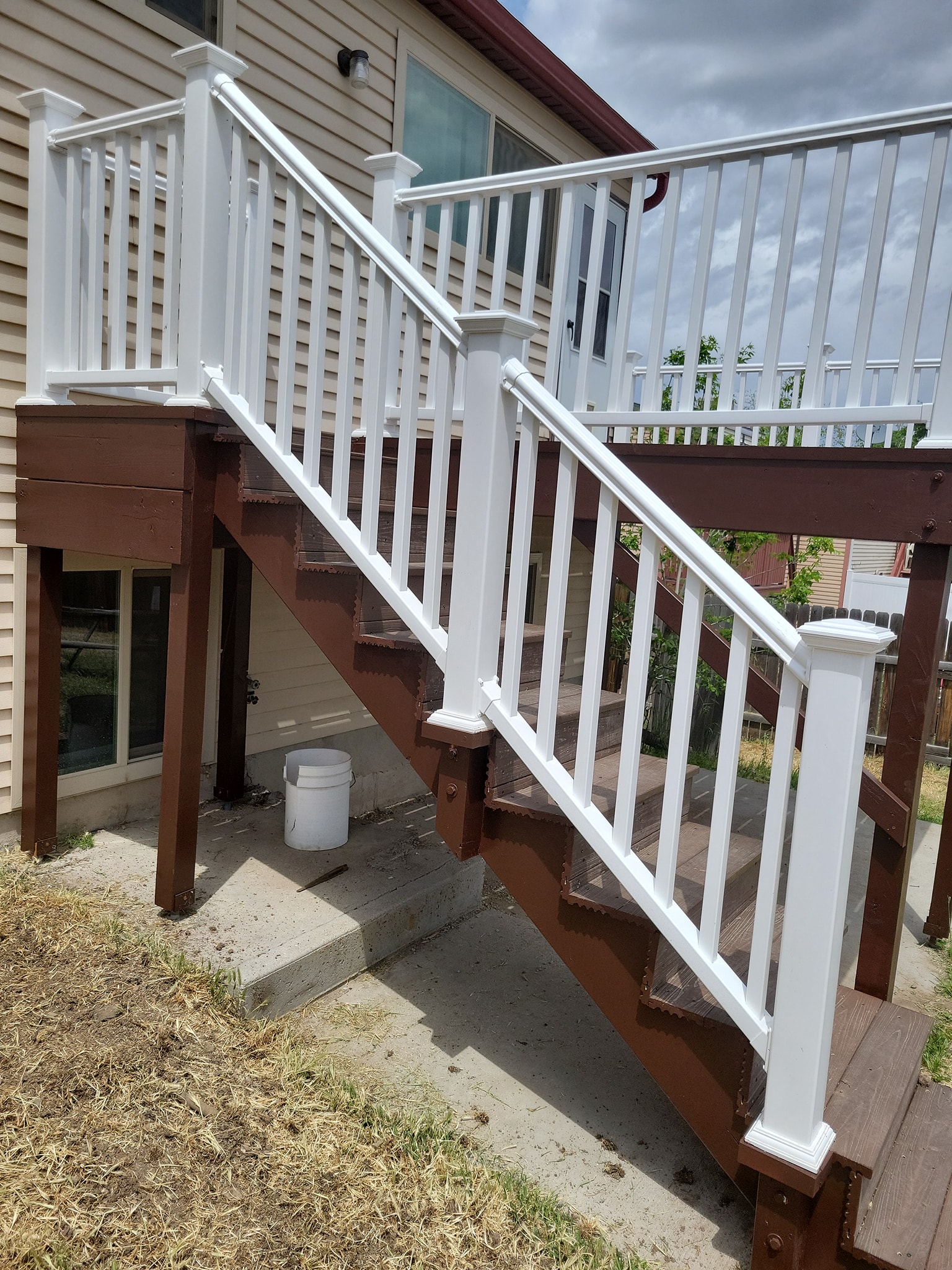
Once wood cracks, it’s not just an ugly sight. It’s an invitation for moisture to rot the wood from the inside out when winter eventually hits. Keeping a fresh seal or stain on your wood surfaces is the best defense against the Salt Lake sun. If you’ve been putting off maintenance, now is the time to act before the damage becomes permanent. You can see some of our recent deck and staircase work here to see what a well-maintained exterior should look like.
3. The Great "Sun-Baked" Breakdown: Caulk and Paint
Most people think of paint and caulk as purely cosmetic, but they are actually your home’s first line of defense against the elements. During a drought, the combination of extreme heat, very low humidity, and prolonged dry conditions causes these materials to become brittle.
Take a look at the windows of your Sandy or Riverton home. Is the caulk starting to flake off? Is the paint on your trim bubbling or peeling? UV damage accelerates during dry spells, and once your caulk fails, you’re losing all that expensive air-conditioned air to the outside.
Fixing these small "skin" issues on your home now is a lot cheaper than dealing with the wood rot or pest infestations that follow when the exterior barrier fails. We’ve talked before about how small repairs protect home value, and during a drought, this is truer than ever.
We’re Here to Help!
Drought maintenance is all about being proactive. Whether it's resealing a deck, checking your foundation, or refreshing that sun-baked caulk, Your Handyman Pros has your back across the entire Salt Lake Valley. We live here, we work here, and we know exactly what the Utah climate does to a house.
Stay tuned for Part 3, where we’ll talk about the smart upgrades you can make to save even more water and money!
If you’re worried about how the heat is hitting your home, give us a shout. I am a licensed and insured contractor, and we’re ready to help you keep your home in tip-top shape.

Utah Drought: Keeping Your Home and Yard Alive - Part 1: Outdoor Water Waste You’re Missing
Utah Drought: Keeping Your Home and Yard Alive - Part 1: Outdoor Water Waste You’re Missing
If you’ve lived in the Salt Lake Valley for more than a single season, you know the drill. When the summer heat hits Sandy, Herriman, and Riverton, it doesn’t just get warm, it gets "is-the-sun-actually-trying-to-melt-my-siding" hot. We live in one of the driest states in the country, and drought isn't just a buzzword here; it’s a way of life.
We see the effects of our climate every day. During drought conditions, it's important for homeowner's to think about conservation. We all want a green lawn, but we also want to keep our utility bills from skyrocketing and ensure there’s actually enough water in the reservoir for everyone.
Did you know that in Utah, roughly half or more of residential water use during the summer months goes toward irrigation? Additionally, a significant portion of that water can be lost through evaporation, runoff, and system issues.
Welcome to Part 1 of our series, Utah Drought: Keeping Your Home and Yard Alive. Today, we’re looking at the low-hanging fruit, the outdoor water waste you might be missing right under your nose.
1. The Dripping Thief: Leaking Hose Bibs and Spigots
We’ve all seen it. You walk past the side of your house in West Valley City or Magna, and you hear that rhythmic drip... drip... drip... coming from your outdoor faucet. You might think, "Eh, it’s just a tiny leak, I’ll get to it when I have time."
But in reality, a single leaking hose bib can waste hundreds of gallons of water over a month. When you multiply that across an entire summer season, you’re essentially throwing money into the dirt.
Usually, these leaks happen because of a worn-out washer inside the handle or because the freeze-thaw cycle of a Utah winter cracked the internal components. If you didn't disconnect your hoses last October, there's a good chance that ice backed up into the spigot and caused internal damage.
Beyond just the water waste, a leaking spigot can lead to cheap fixes turning into expensive problems. If that water pools against your foundation, you’re looking at potential structural issues or basement seepage.
Pro-Tip: Check your spigots while they are turned "off" and while they are turned "on" with a hose attached. If you see water spraying out of the handle area, it’s time for a quick repair or a full replacement.
(Minimalist black and white AI drawing of an outdoor faucet dripping into a small puddle)
2. The Sidewalk River: Sprinkler Heads Spraying Concrete
Have you ever gone for a morning walk in your neighborhood and had to dodge a "gauntlet" of misaligned sprinklers? It’s a common sight in the Salt Lake Valley. We see sprinklers in Riverton and Sandy that are doing a fantastic job of watering the asphalt, the sidewalk, and the neighbor’s fence, but not so much the grass.
Watering your driveway doesn’t make it grow. It just creates runoff that carries lawn chemicals into our storm drains and wastes a precious resource. In fact, research shows that simply being smarter about how you water can reduce your outdoor usage by 25% without you having to pull out a single blade of grass.
Sprinkler heads get knocked out of alignment by lawnmowers, kids playing, or even just shifting soil. Sometimes the little plastic gears inside the head wear out, causing it to "get stuck" in one position.
Here is what we recommend for every homeowner:
The "Walk-By" Inspection: Once a month, turn on your zones manually and watch them for a full cycle.
Adjust the Radius: Most heads can be adjusted with a simple flathead screwdriver. Make sure the spray stops at the edge of the grass.
Check for Clogs: If one head is barely bubbling while the others are full-force, you likely have a clogged nozzle that’s causing pressure issues in the rest of the line.
Fixing these exterior damage prevention issues is one of the easiest ways to be a good neighbor and a smart homeowner.
3. The Invisible Drain: Cracked Irrigation Lines and Slow Leaks
This is the one that keeps homeowners up at night because you can’t always see it. An underground leak in your irrigation system is like having a hole in your wallet that you don't know about until you see the bill.
In areas like Herriman where we have some rocky soil or in West Valley City where older systems are common, irrigation lines can crack for a variety of reasons. Tree roots are a major culprit, as are "ground heaves" from our dramatic temperature swings.
How do you spot a leak that’s buried 12 inches underground? Look for these hidden home problems:
Spongy Spots: If you have a patch of grass that feels like a marshmallow even when you haven't watered in days, there's a leak underneath.
The "Vibrant" Patch: If one area of your lawn is suddenly a much darker, lusher green than the rest of the yard, it's likely poaching water from a cracked line.
Low Pressure: If your sprinkler heads aren't popping up all the way, the water is escaping somewhere else before it reaches the head.
If you suspect an underground leak, don't wait. A small crack can quickly turn into a washout that undermines your landscaping or even your driveway.
We’re Here to Help You Conserve
At Your Handyman Pros, we believe that maintaining a home in the Salt Lake Valley means being a good steward of our environment. Whether you need a new frost-free hose bib installed or help troubleshooting why your backyard has turned into a swamp, we’ve got your back.
It’s often these small repairs that protect your home value. Taking care of your exterior maintenance now saves you from massive headaches when the real "dog days" of summer arrive in July and August.
Stay tuned for Part 2, where we’ll talk about how the drought is actually affecting the structure of your home, from foundation gaps to UV damage on your paint.
In the meantime, if you need a hand getting your outdoor water situation under control, give us a call. We serve the entire Salt Lake Valley, including Herriman, Riverton, Sandy, Magna, and West Valley City.

The Stuff Making Your Utility Bill Worse: Part 3 - Water Waste You Don’t Notice
The Stuff Making Your Utility Bill Worse: Part 3 - Water Waste You Don’t Notice
Hey there, Salt Lake Valley homeowners! We’ve been talking all week about the "silent thieves" stealing money from your wallet through high utility bills. We’ve covered air loss and HVAC killers, but today we’re diving into the one that literally goes down the drain: water waste.
When people think about saving water, they usually think about shorter showers or turning off the tap while brushing their teeth. While those help, the biggest culprits are often the ones you don’t even notice. In fact, household leaks across the country waste nearly a trillion gallons of water every year. That’s a lot of wasted cash!
If you’re looking for a Salt Lake handyman to help plug these leaks, here is what you should be looking for in your own home.
Slow Leaks Under Sinks
The space under your kitchen or bathroom sink is often an "out of sight, out of mind" zone. We cram them full of cleaning supplies and spare trash bags, which makes it easy to miss a slow drip.
A slow leak from a P-trap or a supply line doesn't just waste water; it causes wood rot and mold. If you live in Herriman or Riverton, you know that our dry climate can make homeowners less likely to notice moisture issues until damage has already started. Regularly clear out your cabinets and check for dampness or water stains. If you see a drip, don't wait: cheap fixes can turn into expensive water damage problems if left alone.
The "Phantom Flush": Running Toilets
We’ve all heard it: the toilet that randomly starts filling up in the middle of the night. This is often called a "phantom flush," and it’s usually caused by a worn-out flapper valve. It might seem like a minor annoyance, but a running toilet can waste up to 200 gallons of water per day, which adds up fast on your monthly bill.
If you’re in Sandy or West Valley City and your water bill spiked for no reason, this is the first place I’d look. A simple way to test this is to put a few drops of food coloring in the tank. Wait 20 minutes without flushing. If the color shows up in the bowl, you’ve got a leak that needs a expert in home repair in Salt Lake to swap out those internal components.
Outdoor Hose Bib Drips
As the weather warms up in the Salt Lake Valley, we start heading outside. However, winter can be brutal on exterior plumbing. If you forgot to disconnect your hoses last fall, there's a good chance your outdoor faucet (hose bib) has a small crack or a failed washer.
A drip from an outdoor faucet often goes unnoticed because the water just soaks into the ground. But if that faucet is leaking every second of every day, it’s adding up on your monthly statement. Check your exterior fixtures in Magna and throughout the valley to ensure everything is tight and dry.
Stop the Waste Today
At Your Handyman Pros, we’re all about helping you keep your home efficient and your bills low. Whether it’s fixing a stubborn leak or performing a full home maintenance inspection, we’ve got your back.
Don’t let your hard-earned money leak away. If you need a handyman that Herriman residents trust, give us a shout! We are a licensed and insured contractor.
Stay dry and stay savvy, Salt Lake!
The Stuff Making Your Utility Bill Worse: Part 2 - HVAC Efficiency Killers
The Stuff Making Your Utility Bill Worse: Part 2 - HVAC Efficiency Killers
Welcome back to our series on the silent budget-killers hiding in your home. In Part 1, we talked about air loss through those sneaky gaps in your doors and windows. Today, we’re moving to the heart of your home’s comfort: the HVAC system.
When your heating and cooling system is running efficiently, you barely notice it. But when things go sideways, you notice it exactly once a month: right when you open your utility bill. Whether you’re looking for a home remodel contractor in Utah or just need a quick fix from a handyman in Bountiful Utah, understanding these efficiency killers is the first step to saving some serious cash.
1. The Lowly, Filthy Air Filter
It is the simplest piece of maintenance in your entire house, yet it’s the one most people forget. Your HVAC system is essentially a giant lung. It needs to breathe to work. When that filter gets CAKED in dust, pet hair, and Salt Lake Valley dander, the blower motor has to work twice as hard to pull air through.
Research shows that replacing a dirty HVAC filter with a clean one can lower energy consumption by 5% to 15%. When airflow stays restricted for too long, that strain can also contribute to dirty coils and reduced system performance over time.
Also, check your filter every month, and replace it every 1 to 3 months depending on dust, pets, and season.
2. Blocked Return Vents (The Furniture Trap)
Some homeowners buy a beautiful, new sectional sofa, carefully analyze the feng shui of their living room, find the most aesthetically pleasing place for their new furniture, and gently guide it into its most harmonious location... directly over the large rectangular return vent.
Your system doesn't just "blow" air; it circulates it. If the return vents are blocked, the system can't get the air it needs to "re-condition" it. This creates negative pressure in the room, forcing the unit to run longer cycles. Keep your furniture at least six inches away from those vents to let your house breathe.
3. The "Hole in the Ceiling" (Attic Access Points)
This is the many homeowners in Riverton and Herriman might overlook. Your attic access hatch is usually just a thin piece of drywall or plywood sitting in a frame in your hallway or closet. Since heat rises, all that expensive warm air you’re paying for in the winter (or the cool air escaping in the summer) leaks right through the gaps around that hatch.
Think of it as a permanent open window to the hottest (or coldest) part of your house. Adding a simple weatherstripping seal and a piece of rigid foam insulation to the back of that hatch can make a massive difference in your comfort levels.
Why It Matters
If you’re in Magna or anywhere in the Salt Lake Valley handyman service area, you know our weather is unpredictable. You need your system running at peak performance. When your HVAC struggles, it doesn't just cost more; it dies younger. Replacing a furnace or A/C unit is a massive hit to the wallet compared to the cost of a few filters and some foam tape.
If you’re feeling overwhelmed by your rising bills or you’ve noticed your upstairs is ten degrees hotter than your downstairs, give us a shout. From minor energy-saving tweaks to full-scale exterior damage prevention, Your Handyman Pros has your back.
We are a licensed and insured contractor. We take pride in helping our neighbors across the Salt Lake Valley keep their homes running right.
Stay tuned for Part 3, where we dive into the "Water Waste You Don’t Notice"!
The Stuff Making Your Utility Bill Worse: Part 1 - Air Loss Problems
The Stuff Making Your Utility Bill Worse: Part 1 - Air Loss Problems
Ever feel like you’re literally burning money every time the furnace kicks on? If you live in the Salt Lake Valley, you know our weather doesn’t play around. From freezing canyon winds in the winter to that baking summer heat, your HVAC system works hard. But according to the Department of Energy, the average home can lose about 20% to 30% of the air moving through its duct system due to leaks and poor connections.
On top of that, drafts around doors and windows can make your system work even harder.
Essentially, you’re paying to heat the neighborhood.
Many homeowners think they need a whole new AC unit when, in reality, they just needexpert home repair in Salt Lake. This is Part 1 of our series on why your utility bill is creeping up, and today, we’re talking about the invisible enemy: Air Loss.
1. Drafty Door Thresholds
Have you ever looked at the bottom of your front door during the day and seen a sliver of light? If light can get in, a massive amount of expensive, conditioned air can get out.
Door thresholds take a beating. Between the constant foot traffic and the Salt Lake Valley’s seasonal expansion and contraction, that bottom seal (the door sweep) eventually gives up. Whether you’re in a historic home in Magna or a newer build in Riverton, a worn-out threshold acts like a vacuum for your bank account. Replacing a sweep or adjusting a threshold is one of those "small" jobs that pays for itself in just a few months of utility savings.
2. Window Seal Failures
Windows are usually the biggest culprit for heat gain and loss. If you notice "fog" or moisture trapped between your double-pane glass, that’s a clear sign the factory seal has failed. Once that seal is gone, the insulating gas (usually argon) escapes, and your window is basically just a thin sheet of glass.
Even if the glass looks clear, the perimeter of the window might be leaking. Old caulk around the exterior frame cracks over time, letting drafts whistle right into your living room. If you’re feeling a breeze while sitting on the couch, it’s time to call a Salt Lake handyman to re-seal those frames.
3. Missing or Flattened Weather Stripping
Take a walk around your house and inspect the rubber or foam strips inside your door and window frames. This is your weather stripping. Over years of opening and closing doors in Herriman or Sandy, this material gets compressed, brittle, and eventually falls off.
When weather stripping fails, your door doesn’t sit tight against the frame. This allows air to bypass the door entirely. It’s a classic case of home interior red flags that many homeowners ignore until they see their January heating bill.
Why These "Small" Fixes Matter
You might think a tiny draft doesn't matter, but air sealing your home can trim up to 10% or more off your annual HVAC costs. When your home is sealed tight, your system doesn't have to run as long or as hard to maintain a comfortable temperature.
If you’re tired of high bills and uncomfortable drafts, we can help. Whether you need a handyman in Sandy Utah or someone to crawl around your West Valley City property to find those leaks, Your Handyman Pros has you covered. We specialize in those nagging repairs that make a huge difference in your home's comfort and efficiency.
Stay tuned for Part 2, where we’ll dive into HVAC efficiency killers that are silently draining your wallet!
Your Handyman Pros
Serving Herriman, Riverton, Sandy, Magna, West Valley City, and the entire Salt Lake Valley.